Two Requests
The first request arrived on Monday morning, by email, worded very politely. Khoa, the intern who had once written “I don’t know what I can do, but I want to be near this work”, was asking to leave the team and go back to watching the customer support inbox. The reason he gave was that he wanted “to learn from the basics”.
The second request arrived on Tuesday afternoon, and not by email. Tùng, an engineer who had been with the team since the first week of the whiteboard, stood in front of Thắng Tất’s desk, hands in his pockets, and spoke fast, as if afraid he might change his mind:
“I want to quit. I can’t work with Phong anymore.”
Thắng Tất asked him to sit. Tùng didn’t sit.
“I finish writing a section, and the next morning I open it and it’s been rewritten. Nobody tells me. Nobody explains. When I ask, he answers in exactly one line: ‘The old one was slow.’” He stopped and took a breath. “The old one really was slow. The new one really is faster. I know. But for three months now I haven’t known what I came here to do.”
That evening, Thắng Tất opened Khoa’s email again and read it more carefully. On the very last line, after the thank-you, was a sentence he seemed to have written and then meant to delete, and forgotten: I asked Phong a few times, and he told me to read the code and I’d understand.
He looked at the two requests side by side on the screen. Two different people, two different ways of saying it, one and the same name.
Phong. The night-shift engineer who had worked out how to let the agents recognize a customer’s worry on their own, which was what made the number on the board jump from three thousand to eight thousand seven hundred. The one who had pulled the data alone at four in the morning and found the six calls that rang in silence. If he had to point to one person without whom the team would never have got where it was today, Thắng Tất would point to Phong without having to think.
And Phong was also the very person two colleagues were ready to leave rather than keep sitting next to.
The Night-Shift Man
Since the ninety days, Trung had let Thắng Tất lead the team. He made no appointment and announced nothing. He never sat in on another Friday afternoon review, and whenever someone asked him about something to do with the team, he pointed toward Thắng Tất’s desk. Until one day, people went straight there on their own.
So this time, too, Thắng Tất went looking for the answer himself first.
He went through the change history in the system for the past three months. Phong had rewritten the work of four people, mostly between one and four in the morning. Every time, the new version was better than the old one. Every time, there wasn’t a single line of notes. He counted the times Phong had answered questions in the team’s shared channel: twenty-three, the longest of them eleven words.
He went to see Lực Sỹ, one of the longest-serving people at Hải Đăng, to ask what kind of person Phong was.
Lực Sỹ thought for a moment. “For three years Phong has worked the night shift alone,” he said. “On the night shift there’s nobody to ask. If something breaks, you fix it yourself, then you go to sleep, and whoever comes in the next morning just sees everything running.” He tapped the tip of his pencil lightly on the edge of the desk. “On the night shift, someone like that is the best there is. Nobody ever told him the day shift is different.”
“It was different back when we were upstairs from the phở shop,” Lực Sỹ went on. “The company had a custom: once a year, everyone had to change seats. I was in operations, then I moved to sales for half a year, then sat on the night shift for three months. Everyone called me the company’s utility knife. Wherever we were short, that’s where I went.” He laughed, a little embarrassed. “Once things started running smoothly, the custom just faded away. Phong has stayed in one seat, on one shift, for three years.”
Thắng Tất sat very still. He suddenly remembered himself less than a year earlier, at the second row of desks, quietly fixing what other people had broken, closing tickets, then going home. Back then, he too had thought the best people were the ones who didn’t need anyone.
On Wednesday evening, he messaged Trung and told him about the two requests. This time he didn’t whittle his words. He wrote straight out what he had been thinking for two days: In a management book I read, they say you have to get the right people on the bus, and the wrong people off the bus. I think maybe Phong isn’t right for this team.
Trung replied close to midnight:
I’m tied up all this week, I can’t call in the evenings. I’ll just ask one question: have you asked Phong which seat on the bus he wants?
Writer’s corner – What to make, later
In 2001, Jim Collins published Good to Great, the result of five years of research into companies that had gone from good to great. He packed one of his findings into the image of a bus: the leaders of those companies first worried about who was on the bus, and only then discussed where the bus should go. Get the right people on, the wrong people off, and the right people in the right seats.
People usually remember the part about getting people off and skim over the part about the right seats, even though it is the second part that demands the most from whoever leads the team. A good person in the wrong seat, seen from the outside, looks no different from the wrong person.
On August 23, 1937, Bill Hewlett and Dave Packard wrote up a meeting about starting an electronics company together, and it contains one very odd line: the question of what to manufacture was postponed. In the early years they took on all sorts of work, from foul-line indicators for bowling alleys to drives for telescopes, before they sold audio oscillators to Walt Disney for the film Fantasia. The only thing they were sure of from the start was the person sitting next to them.
Thắng Tất nearly did the opposite. He had been about to ask Phong off the bus before asking which seat he was in, and who had left him sitting there for three years.
A Week of Empty Desks
Before Thắng Tất had a chance to ask Phong anything, Phong was away.
It was the first time in three years Phong had taken leave: his younger sister was getting married, in a mountain district eight hours by bus from the city. He left on Wednesday evening, leaving exactly one line in the shared channel: Off until Monday. System’s fine.
That same week, Trung was away. The entire twelfth floor was closed for three days for the quarterly board meeting. Thắng Tất only knew this from a small notice taped up in the elevator, and because the café on the ground floor ran out of pastries earlier than usual. He thought to himself: why was everyone away this week?
At one forty on Friday morning, Thắng Tất’s phone buzzed.
It was Quân, who was in charge of the monitoring board, sending three messages in a row. For the past two days, nineteen clinics newly signed up for the Sound Sleep package had stopped receiving the half-past-eleven test call. And if the test call wasn’t running, Quân wrote, then quite possibly the call to the second contact wasn’t running either.
That was exactly the part Thư had proposed, after the six calls that rang in silence. The part Phong had rewritten, alone, on the night before he left.
Thắng Tất called Phong. The number could not be reached. He sent a message. It sat there with a single grey tick.
By half past two, five people were at the office, in a dark building with only one row of lights still on. They opened the part Phong had written. More than three thousand lines, running very fast, very clean, and not a single line explaining why it had been written that way. Reading it was like walking into a beautiful house that had no light switches.
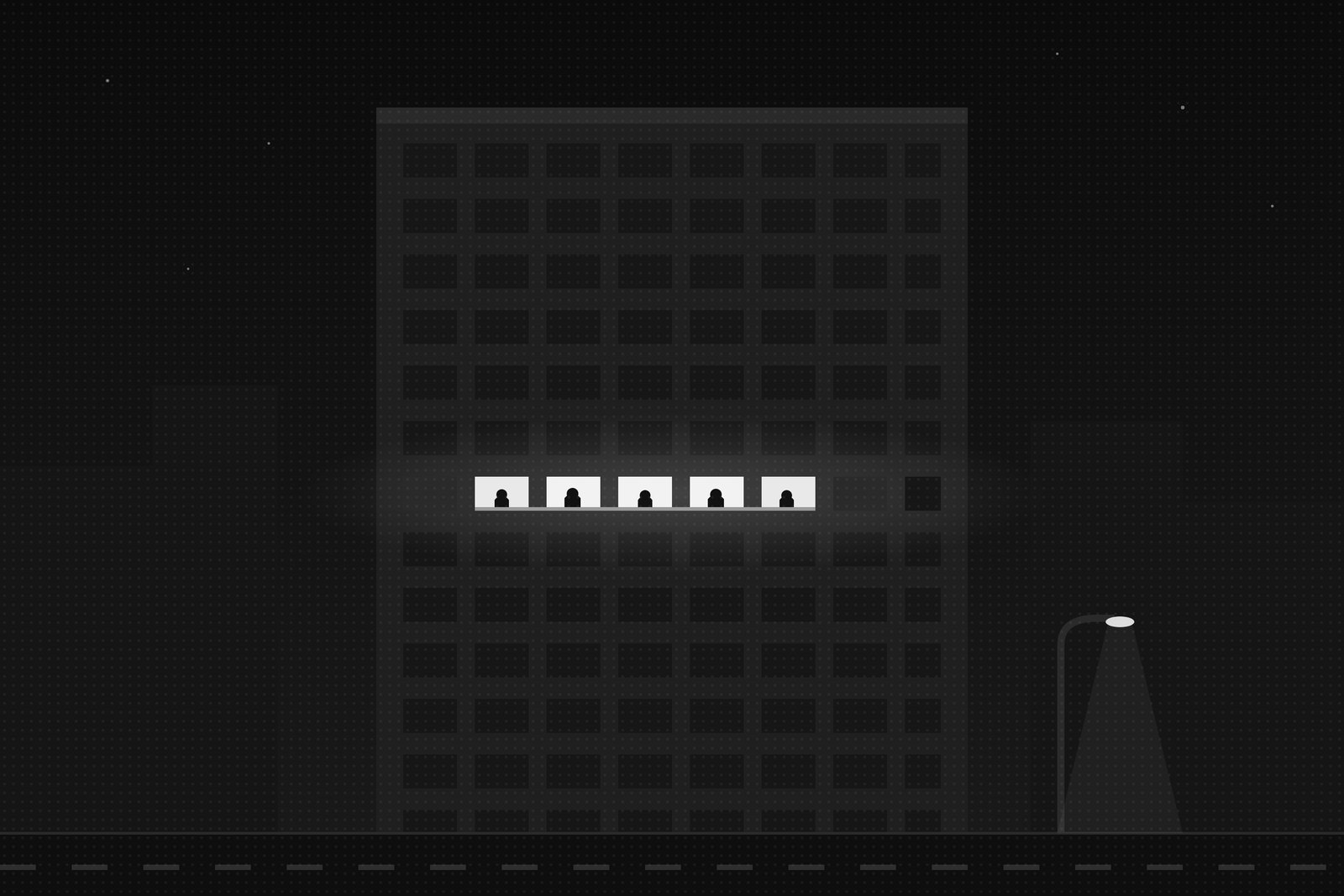
Ngọc Mai came last, carrying a bag of bánh mì from the bakery at the head of the lane, the only place with its lights still on. She couldn’t read code. She sat down next to Thắng Tất and, every half hour or so, topped up his cup without asking anything. Only toward dawn did he notice that his cup had never once run dry.
The one who found the bug, at nearly five in the morning, was Khoa.
He wasn’t better than anyone else. He was simply the only person in the room who had already read that code before, over and over, very slowly, because nobody would explain it to him and he didn’t want to ask again. A variable had been renamed in the last rewrite, and nineteen new clinics had fallen into a branch that nothing called anymore.
At seven in the morning, nineteen doctors received a late test call along with a message of apology. No patient was affected. Luckily, there had been no case that night that needed an urgent call.
Thư was the one who wrote the incident report. In the “what-if-it-fails” column, she filled in a line nobody in the room wanted to read aloud: First to find out: luck.
Writer’s corner – Everyone gets a turn to speak
In 2010, Anita Woolley, Thomas Malone and their colleagues divided nearly seven hundred people into small groups to solve many kinds of problems together. They found that each group had something like its own intelligence quotient, which they called collective intelligence, and that it barely depended on the smartest member. It depended on how sensitive members were to the feelings of the people next to them, and on whether everyone got to speak roughly equally.
We are used to measuring a team by its best member. Yet the real measure lies with its quietest: whether that person dares to speak up.
In 2012, Google launched Project Aristotle to find out why some teams did well and others didn’t. They looked at more than one hundred and eighty teams and sliced the data every way they could, yet found almost no pattern in who was on a team. In 2016, telling the story of that search in the New York Times, the journalist Charles Duhigg came to rest on Woolley’s very research: good teams differ from bad ones in how people treat each other, and in everyone getting a turn to speak.
On the night of the incident, the one who found the bug was Khoa, the intern who had asked several times and only been told to read the code himself. If he had left, that room with its single row of lights would have been far less intelligent.
Which Seat on the Bus
Phong got back to the office on Monday morning, his eyes still red from the overnight bus. He read the incident report from start to finish, standing, not sitting. When he reached Thư’s line, he stood still for a while.
Thắng Tất invited him down to the café on the ground floor. He didn’t bring the two requests, and he didn’t bring a solution either.
“I’m not planning to talk about last week,” Thắng Tất began. “Everyone makes mistakes. I want to ask you something else: if you could choose, what would you want to do on this team?”
Phong looked at his cup of coffee, then out through the glass door. He was silent for so long that Thắng Tất thought he wasn’t going to answer.
“I want to do the hardest parts,” Phong said. “And I want not to have to explain. Explaining takes three times as long as doing.”
“Last week, five people spent nearly three hours understanding a piece you did in one night.” Thắng Tất spoke slowly, without blame, just setting the number on the table the way Trung always did. “If it weren’t for Khoa, maybe nobody would understand it even now.”
Phong said nothing.
“In the book Trung always carries around, there’s a passage about hiring people,” Thắng Tất went on. “The writer chooses people by four words: heart, mind, strength and manner. Strength is schooling, experience, track record. On that one, nobody in the company comes close to you. Mind is seeing a problem before others do, turning chaos into order. You have that too, except for the last line: being able to light a fire in other people. Under heart there are a few very simple questions: are they honest, do they give their all, do they shy away from hard work, and do they think of themselves or the group first.” He paused for a moment. “You can answer all of them, except the last. And I don’t think you’re selfish. I think you’ve never had to think about that question, because in three years on the night shift you had no group to think about.”
Phong looked up. For the first time, Thắng Tất saw something in his eyes that looked like surprise.
“The fourth word is manner,” Thắng Tất said, more slowly. “The writer doesn’t mean fine words. He means how you behave, how you speak to the person sitting next to you. Rewriting someone else’s work at two in the morning without leaving a single note, and answering the old one was slow when they ask: that isn’t a lack of talent, and it isn’t a lack of heart. That’s manner. And manner can be learned, if you’re willing to sit next to other people long enough.”
The night before, Thắng Tất had read another passage in the book, one he had to read three times before it stopped bothering him. The writer said that talented people, in the course of showing their talent, reveal a great many weaknesses, many Achilles’ heels, and a single small arrow is enough to kill them. Who will protect the talented? The organization, the leader.
He had meant to put Phong off the bus. He had very nearly done it. And he understood that if he had, he wouldn’t have been protecting the team. He would have been the one firing that small arrow.
On the very next page was a passage about rotating people that he had skimmed past before. The writer said that to know whether someone fits, you have to put them to real work. Anyone who doesn’t fit in one place should be moved to where they can do their best, sideways or up or down, rather than cast aside. Stay too long in one place and people wear down, and changing seats is itself a way of learning. But the move has to come from the person being moved. Reading that, he thought at once of Phong’s three years on the night shift.
“Here’s what I propose,” Thắng Tất said. “You keep doing the hardest parts. Nobody touches your work unless you want them to. But a piece of work only counts as done when someone else on the team can fix it at three in the morning without having to call you. The first person to learn with you is Khoa.”
He paused for a moment, then added: “There’s one more thing, if you agree. For the next three months, you try the day shift. Lực Sỹ has offered to take the night shift in your place. He says three years in one seat is too long for anyone, even the best. You can say no.”
Phong was silent for a long while.
“The day shift is fine,” he said at last. “But the kid already asked to transfer.”
“Not yet,” Thắng Tất said. “I haven’t signed it.”

Five Fingers
Khoa stayed. Tùng didn’t.
Thắng Tất sat with Tùng for nearly an hour, told him about his proposal, asked whether he would like to try one more month. Tùng heard him out, thanked him, and still asked to leave. He said one thing that Thắng Tất would never forget: “I believe you’ll fix it. But I was worn out before you started fixing it.”
Thắng Tất signed the request. He didn’t try to hold him any longer. He understood that when a team leader is three months late, someone pays for those three months, and this time the one who paid was Tùng.
That weekend, Phong posted a four-page document in the shared channel, explaining the code that five people had spent nearly three hours reading. At the bottom was a small note: Written with Khoa. The parts that make sense are Khoa’s. Nobody commented. But by evening, everyone in the company had opened it, and some had read it three times.
On Friday afternoon, Trung came back to the office after more than a week away. Thắng Tất told him everything, including the part he had nearly gotten wrong.
Trung heard it all, then turned the old book to a page Thắng Tất had never read and swivelled it toward him:
Of the five fingers, some are short and some are long, but each has its own function, and that is why, when they close together, they make a fist.
“People tend to read this as being about unity,” Trung said. “To me it’s about not making the thumb be as long as the middle finger. And not cutting off the thumb just because it isn’t like the others.”
“But I still lost Tùng.”
“Yes.” Trung nodded. “Every team leader has a name like that. Don’t forget it. It will make you faster next time.”
Before leaving, Thắng Tất told him one more thing: he wanted to bring back the seat-changing custom Lực Sỹ had mentioned. Each quarter, one person on the team would change places, sideways, up or down, as long as that person wanted to.
Trung listened, then nodded. “There’s a passage in that book I like,” he said. “Seen from the outside, some people move up, some move down, some move sideways. But wherever they land, they have to prove themselves all over again. If they can, then even from the lowest place there is still a way up.” He took a sip of his coffee. “People tend to read that as a consolation for those who get moved down. I read it as advice for someone who chooses the harder seat, too.”
Thắng Tất guessed he was talking about Lực Sỹ, the longest-serving member of the team, who had just volunteered to take the night shift alone.
Writer’s corner – A Sunday letter
In 2006, Will Felps, Terence Mitchell and Eliza Byington pulled together research on how one person can spoil a whole group. They named three types: the one who withholds effort, the one who is always in a heavy mood, and the one who disrespects colleagues. The harm one such person does is usually much greater than the good one good person brings, because others become defensive, withdraw, or start to imitate.
The name “bad apple” makes it easy to think the rot is inside, even though that same review says behaviour often comes from context. A bad apple has to be thrown out, but a way of behaving can be changed, as long as someone calls it by its right name.
On Sunday, September 16, 2018, Linus Torvalds, the creator of Linux, known for his scathing emails to contributors, sent a very different one. He acknowledged that those attacks had been unprofessional and uncalled for, apologized to the people he had hurt and who might have left Linux development entirely because of him, and took time off to learn how to understand other people’s emotions. That same week, the project replaced its brief rule “be excellent to each other” with a full code of conduct.
Phong was not a bad person. But Tùng was already gone, like the people Torvalds admitted might have walked away because of him.
· · ·
Before heading home, Thắng Tất asked Phong, who understood the system better than anyone on the team, who could create a trial without leaving a name. Phong opened the log, frowned, and typed a few more commands.
“It’s not a Hải Đăng account,” he said. “Someone outside is looking into our system.”
The number that day was 86.4%.
Thắng Tất’s Notebook
He wrote this page on the night he signed Tùng’s request:
- A talented person in the wrong seat looks a lot like someone who doesn’t fit. Before you ask anyone off the bus, ask them which seat they want, and whether anyone has told them the rules of this bus. And don’t let anyone sit in one seat too long, not even the best.
- Choose people by four words: heart, mind, strength, manner. Strength is the easiest to see, so it’s the easiest to let it blind you to the other three. The question under heart that is easiest to skip is whether they think of themselves or the group first; some people can’t answer it because they have never had a group to think about. And the two letters on my desk were really about manner: how a person treats whoever sits next to them.
- Protecting talented people is the team leader’s job. So is protecting the whole team. Be slow at either one, and someone will pay. Remember their name.
In the margin, he wrote small: A piece of work is only done when someone else can fix it at three in the morning.
Over to you
- On your team, is there someone so good that the whole team depends on them, and for that very reason nobody understands what they are doing?
- The last time you thought about “asking someone off the bus”, had you asked them which seat they wanted?
- If the best person on your team took a week off, what would break first, and who would find out?
- Is there a name you lost because you were slow to decide? What did you learn from that name?
Further reading: Jim Collins, Good to Great, HarperBusiness (2001); Anita Williams Woolley, Christopher F. Chabris, Alex Pentland, Nada Hashmi & Thomas W. Malone, Evidence for a Collective Intelligence Factor in the Performance of Human Groups, Science (2010); Will Felps, Terence R. Mitchell & Eliza Byington, How, When, and Why Bad Apples Spoil the Barrel, Research in Organizational Behavior (2006); Charles Duhigg, What Google Learned From Its Quest to Build the Perfect Team (2016). Hải Đăng and all characters are fictional.