A Question in the Middle of the Party
The party for eight thousand seven hundred was held right in the large meeting room, on a Friday afternoon. Nobody called it a party, because Hải Đăng wasn’t in the habit of celebrating. It was only that Hằng brought up two boxes of steamed rice cakes, Ngọc Mai ordered a few cups of milk tea, and Quân put the photo of the day-ninety whiteboard up on the screen, blown up so large that Trung’s small line in the bottom corner took up nearly half the wall.
People laughed a lot. It was the laughter of people who have just come a long way, legs still aching, but no longer worried.
Thư sat at the head of the table, near the door. She had joined the team only two weeks earlier, after twelve years as a claims adjuster for an insurance company. Trung was the one who had brought her in. He introduced her briefly at the Monday morning meeting, “Thư will be sitting with our team,” and nothing more, no further explanation. In those two weeks she had said very little. She read, she took notes, and every time she finished a document she folded down a tiny corner of a page, the way you mark a place you need to come back to.
When Quân raised his cup of milk tea, she raised her hand.
“May I ask a question?” Her voice was quiet and even, not at all the voice of someone out to spoil the party. “Of these eight thousand seven hundred companies, how many will still be here in six months?”
The meeting room went still for a beat. Quân lowered his cup.
“We haven’t thought as far as six months,” Thắng Tất said, trying to keep his voice cheerful. “We’ve only just finished ninety days.”
Thư nodded, as if that were exactly the answer she had been waiting for. “One more question. The Sound Sleep package promises that when there’s a dangerous case, the agent will call the doctor no matter what time it is. Has anyone checked whether the doctors actually pick up?”
This time nobody answered. Ngọc Mai looked down at the box of cakes. Someone quietly cleared their throat. The silence wasn’t heavy, but it spread very fast, like a drop of ink falling into a glass of clear water.
Trung sat at the back of the room, stirring his coffee. He said nothing at all.
The Bad-Weather Forecast
The following week, Thư asked four more questions. Each one came right when everyone was happiest.
When Ngọc Mai showed off her new opening script for the bakeries, Thư asked what would happen if a shop owner misread the “losing money without knowing it” package as a warning that their money really was disappearing. When Quân reported that the satisfaction rate had gone up three points, she asked whether those three points were measured on the people who had stayed, or on everyone, including the ones who had left. When Phong presented how the agents recognized a customer’s worry on their own, she asked, “What does it look like when it gets it wrong?”
Phong looked at her for a moment, then said, “It doesn’t get it wrong.”
“Then you haven’t seen it get it wrong,” Thư said. Not harshly. Just the way you would correct a number.
By Thursday, Quân had given her a nickname, murmured in a corner of the pantry: “the bad-weather forecast department”. A few people laughed. Thắng Tất laughed too, then felt a little embarrassed that he had.
But, if he was honest, he was tired. For three months the team had run on a kind of energy that was hard to name, the energy of ten people believing in the same whiteboard. Each of Thư’s questions was like a hand quietly turning that flame down. He saw it on everyone’s faces after every meeting: a slight sag, a slight hesitation, a slight “let’s deal with it next week”.
On Friday evening he sat down to write a message to Trung. He wrote it three times over, whittling every word until it sounded as gentle as possible. The final version was just two sentences: I think Thư would do better working on her own. Our team needs to keep its momentum.
Trung replied ten minutes later, also with just one sentence:
Are you sure the person who makes you uncomfortable isn’t the person you need most?
The Reasoning of People Unlike Us
On Monday morning, Trung said nothing about the message. He only set the old book down on Thắng Tất’s desk, already open to a page with pencil marks, and went back to his seat.
A leader must know how to take in people unlike himself.
Below it, in the same faded pencil, was a longer passage. Taking in people unlike you, the writer said, is not only kindness. Its root is understanding: understanding the reasoning of people unlike you, of lines of thought unlike your own. And because you understand, you know when to use them, and for what. The bigger the leader, the more people he must be able to take in. As many people as you can take in, that is how many you should lead.
Thắng Tất read the last sentence twice. Then he sat and counted, and he wasn’t pleased with the number he got.
The team had ten people, him included. Six had come because of the whiteboard: Phong, Hằng, the intern, the head of sales, and two engineers. The other four had been together since the Sound Sleep package. Each with a different trade, a different age, a different voice. But they were all alike in one thing: they liked building things that didn’t exist yet. They were people who looked at a hard problem and saw a path, not a cliff. The whiteboard was a magnet. And a magnet only attracts iron.
Ten people, and as it turned out, only one way of thinking.
He messaged Thư and asked whether she was free for a coffee. He didn’t bring his laptop. He remembered what Lực Sỹ had told him once: don’t bring a solution, just go empty-handed.
Writer’s corner – Three teams, one solution
In 2004, Lu Hong and Scott Page published a much-debated result. Using mathematical models and simulations, they showed that under certain conditions, a randomly chosen group that is diverse in its approaches can outperform a group made up entirely of the best performers, because the best tend to be good in the same way and to get stuck in the same places. In his 2007 book The Difference, Page made it clear that the strength comes from differences in how people see and solve problems, not in age or appearance.
So diversity doesn’t arrive just because we hire more people. It arrives only when we hire another way of thinking.
Netflix once offered a million-dollar prize to anyone who could improve its movie recommendation algorithm by ten percent. The team that won in September 2009 was assembled from three groups: BellKor, which grew out of AT&T Labs; BigChaos, two Austrian researchers; and Pragmatic Theory. The leading teams all blended very different techniques rather than honing a single method. Another alliance reached exactly the same result, and lost only because it submitted twenty minutes later.
The ten people in Thắng Tất’s group differed in age, in profession, in accent. They didn’t differ in the one way that mattered most: all of them looked at the problem from the builder’s side.
The Bakery with the Fire Alarm
The café on the ground floor was empty. Thư ordered a hot tea and sat up straight, both hands on the table, like someone waiting to be interviewed.
“I’m sorry about the past few days,” Thắng Tất began. “Everyone’s been a bit…”
“It’s fine.” She smiled, the first time he had seen her smile. “I’ve had twelve years to get used to it. At my old company, my department was called the ‘yes, but’ department.”
He asked her why she had left insurance. She didn’t answer right away. She turned her cup of tea around once, then told him a story.
In her first year on the job, she was handed the claim of a small bakery that had burned down at three in the morning. The paperwork was all in order. The shop had a fire alarm installed, an inspection report from the installer, a signature and a stamp, the word passed printed in bold. She went to the site, stood in the middle of the still-warm ashes, and found the alarm, intact, on the ceiling. There was no battery inside.
“The owner said the alarm kept going off by mistake every time a batch came out of the oven. After a while he took the battery out. Meant to put it back one of these days.” Thư paused. “Everything had been checked. It was just that nobody checked whether it still rang.”
Thắng Tất sat very still.

“In insurance,” she went on, “you don’t sell a promise. You sell keeping that promise on the worst day. For twelve years, I only ever met customers on the worst day of their lives. So I got used to thinking backwards: if this goes wrong, how will it go wrong, at what time, and who will be the first to find out.” She looked at him. “Usually the first to find out is the customer. And by then it’s too late.”
“So why did you come here?”
“Because I got tired of meeting people on their worst day.” She took a sip of tea. “I wanted to try standing out in front, for once.”
Thắng Tất went back to his desk and opened the Sound Sleep package’s configuration sheet. He found the line that logged the status of urgent night-time calls. The system recorded exactly two words: call placed.
There was no column that said answered.
Writer’s corner – Nobody else has had this problem
In 1972, the psychologist Irving Janis published Victims of Groupthink, analysing disastrous American foreign policy decisions such as the Bay of Pigs invasion of 1961. He showed that close-knit, confident groups fresh from success are prone to a particular state: everyone tacitly avoids saying anything that goes against the grain, silence is taken as agreement, and whoever raises a doubt is seen as spoiling the shared spirit.
Janis didn’t blame ignorance but harmony. And groupthink doesn’t need a small room: a whole organization can believe the same thing together, and then refuse to listen together.
From 1999, Britain’s Post Office used Horizon, an accounting system developed by Fujitsu, in its branches. When subpostmasters reported unexplained shortfalls in their accounts, the Post Office insisted the system was robust, made them pay the money back themselves, and repeatedly told them, falsely, that nobody else had experienced the same problem. Between 1999 and 2015, more than nine hundred people were prosecuted. Only in 2019 did a High Court judge conclude that Horizon contained bugs, errors and defects that made it unreliable.
Thư’s question at the party was treated the same way, on a much smaller scale: the whole room saw it, and the whole room chose to go on eating rice cakes.
The Silent Phone
It took Phong a night to pull the data. He did it alone, without telling anyone, and sent the result at four in the morning, with one line that had no punctuation at all: thư was right
Of the more than two hundred clinics using the Sound Sleep package, thirty-one doctors set their phones to do-not-disturb from eleven at night. Over the past three months, the agent had made twenty-three urgent calls at night. Six of those calls rang in silence, on phones lying face down on bedside tables, in six dark rooms that no one on the team had ever set foot in.
The system logged all six as call placed. And the agent, exactly as it had been taught, messaged the patient: “The doctor has been notified.”
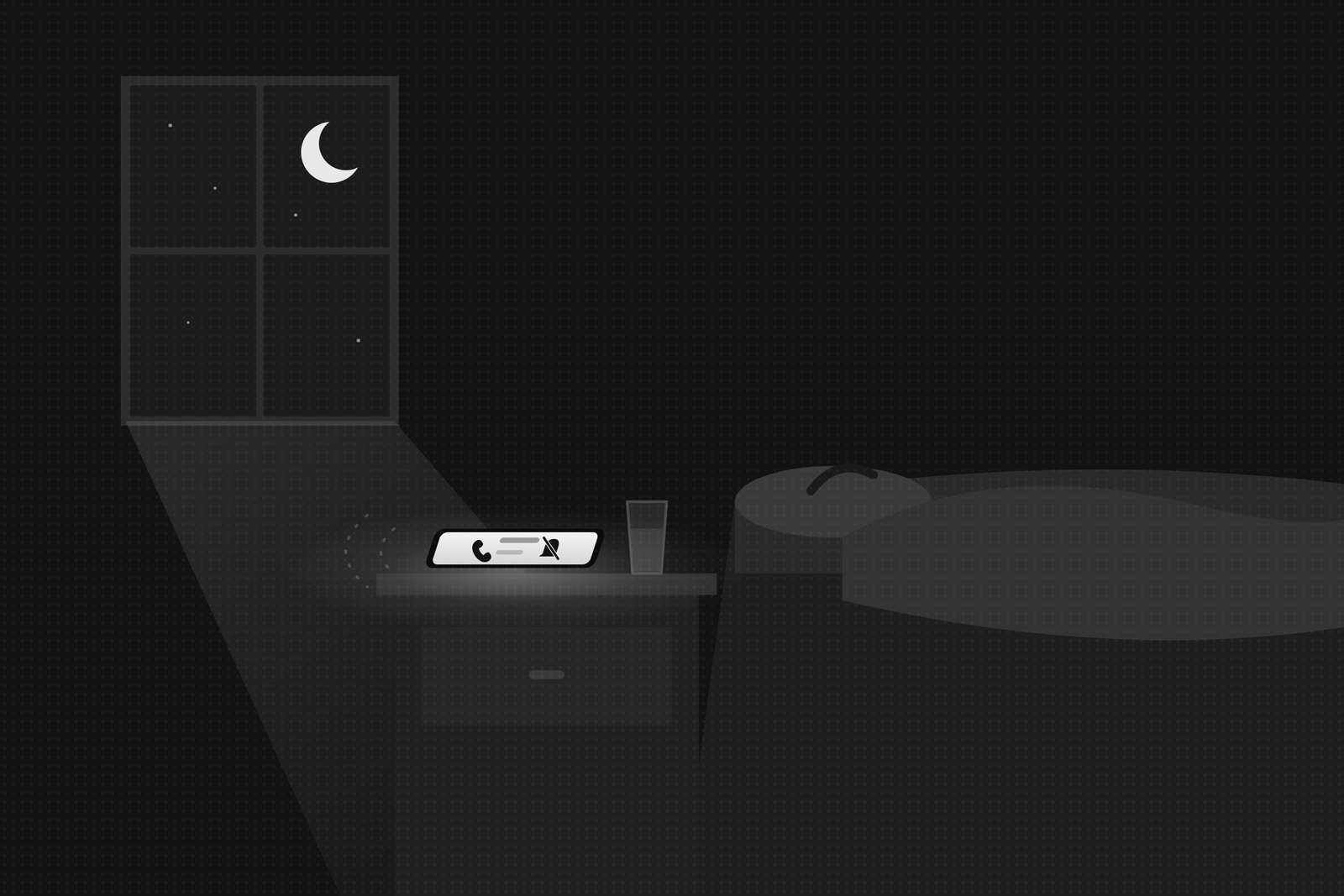
No one came to any harm. Five people took themselves to the emergency room, following the instructions. One waited until morning, then came into the clinic with one cheek badly swollen, and his doctor apologized again and again over a call she hadn’t even known had been made.
When Thắng Tất reached that line, he put his phone down. A chill ran down his spine, as familiar as the night he read the flower shop owner’s message. But this time it came with another feeling, a far more uncomfortable one. He remembered the party, Thư’s raised hand, and the silence spreading like ink in water. That question had been sitting on the table for nearly two weeks. The whole room had seen it. And the whole room had chosen to go on eating rice cakes.
There was only one thing he couldn’t understand: the first clinic. Dr. Diệp wanted to sleep after ten at night too; it was the first thing she had ever told him. And yet on the night she was called at one in the morning, she had picked up.
That afternoon, he asked to go down to the clinic. Thư went with him. At the last minute Trung put on his jacket and came along too, saying it had been a long time since he had been down to that market.
The clinic hadn’t changed. Still one dental chair, one instrument cabinet, a row of plastic chairs, and the smell of antiseptic that crept into your clothes. Dr. Diệp had just seen her last patient out the door. She saw Thắng Tất first and nodded hello. Then she saw the man standing behind him.
“It’s been a long time,” she said.
“Still the last one to switch off the lights?” Trung asked.
“Still.”
Thắng Tất looked from one to the other, a little surprised. “You know Dr. Diệp?”
“For a long time,” Trung said, and pulled up a plastic chair and sat down, like someone who had sat there many times before.
So Trung had had his teeth seen to here too, Thắng Tất thought. The clinic was near the market; everyone gets a toothache sometime.
Dr. Diệp opened her phone to show them. In the list of numbers allowed to ring through while the phone was on silent, the agent’s number sat on the very first line.
“I set it up myself, the first night,” she said. “I knew I’d be turning the ringer off. I hired it so I could sleep, not so it could call me and I wouldn’t hear.” She paused. “I assumed everyone knew to do that.”
Nobody knew. Not even Thắng Tất. That step wasn’t on the “Why” page, nor in the why column, because it had never been his job. It was the job of one careful doctor, done alone, on a night nobody saw. When the Sound Sleep package multiplied into two hundred clinics, whatever was on paper got copied over all two hundred times. A person’s habits did not.
Writer’s corner – That will never happen
To fight groupthink, many organizations give someone the role of “devil’s advocate”, whose job is to argue against. In 2001, Charlan Nemeth, Keith Brown and John Rogers had one group hear from someone playing that role and another hear from someone who genuinely disagreed. Authentic dissent helped the group come up with more and better solutions. Role-played dissent did much worse, and sometimes even made the group cling harder to its original view.
People can tell at once which question has been assigned and which worry is real. But even real dissent is only worth something when someone is willing to change their mind because of it.
In the late 1960s, Margaret Hamilton led the team writing the software for the Apollo spacecraft at MIT’s Instrumentation Laboratory. She was the one who coined the phrase “software engineering”, at a time when writing code was not yet considered an engineering discipline. On weekend evenings she often brought her four-year-old daughter, Lauren, to the lab. Once, Lauren played with the keyboard of the cockpit simulator and selected program P01, meant only for preparing before launch, while the simulated spacecraft was in flight. The system crashed. Hamilton realized an astronaut could make the same slip, and asked to add code that would block P01 during flight. Her superiors turned it down: astronauts were trained not to make mistakes; that would never happen. All she was allowed was one line in the flight documentation: “Do not select P01 during flight.”
Around Christmas 1968, five days into the flight, Jim Lovell on Apollo 8 selected P01. All the navigation data he had gathered was wiped out; the computer thought the spacecraft was still sitting on the launch pad, and no longer knew how to bring the three men home. Hamilton’s team at MIT and mission control in Houston had to work it all out again and send new data up to the spacecraft. From the following missions on, the code she had asked for was finally added. She died at the end of September 2026, at ninety; the story of “Lauren’s error” is still passed among software people as a first lesson of the craft.
Hamilton was not playing the objector. She had seen the system crash with her own eyes. What was missing that year was not someone willing to ask, but someone willing to change their mind.
Thư was the same. Her question came from twelve years of standing among the ashes, and this time the group was willing to fix things before another call rang out in silence.
The What-If-It-Fails Column
That evening, the team fixed three things.
The agent was no longer allowed to say “the doctor has been notified” when the doctor hadn’t picked up. It could only say what it knew for certain: “I’m calling the doctor now. While you wait, please do the following right away.” If nobody answered after two minutes, it would call the second contact the clinic had registered, and tell the patient honestly that the doctor hadn’t picked up yet.
Every new clinic, on its first night, would get a test call at half past eleven. If the doctor didn’t answer, someone would call back the next morning and sit with her until the setting was done.
The third thing was Thư’s. She proposed adding a new column to the agent configuration sheet, right next to the why column. She called it the “what-if-it-fails” column. Every promise an agent made to a customer had to answer three questions: if this promise fails, how will it fail; what time will it be; and who will be the first to find out. If the answer to the third question was “the customer”, that promise was not yet allowed to be sold.
Quân was the one who filled in that column for the first three packages. He stayed until nine at night, and the next morning he went to Thư’s desk and set down a cup of hot tea. He said nothing about the nickname. Thư didn’t ask either.
That afternoon, Ngọc Mai stopped by Thắng Tất’s desk and said quietly, “At the party, when Thư asked, I was about to say ‘oh, come on.’ Good thing I didn’t.” She tilted her head and looked at him. “You were going to say the same, weren’t you?” Thắng Tất didn’t deny it. To be read that easily, and all he felt was relief.
At the end of the week, Thắng Tất went over to Trung’s desk. Trung was standing by the window, looking down at the street.
“I take back the message I sent the other day,” Thắng Tất said.
“I never took it as a request,” Trung said, without turning around. “I took it as a question. You were asking me whether you were allowed to work only with people like yourself.”
Thắng Tất was silent for a while. “The book says you should lead only as many people as you can take in. So until last week, I could only lead ten.”
Trung turned around and smiled. “It’s eleven now.”
The Friday after, the team celebrated again, this time for nine thousand. Quân raised his cup of milk tea, then stopped halfway and turned toward the head of the table.
“Thư,” he said, “before we drink, do you have a question?”
The whole room laughed. But this time, nobody looked down at the box of cakes. Everyone turned toward the door, and waited.
Writer’s corner – A place where answers can emerge
Linda Hill, a professor at Harvard, spent years following some of the most creative teams in the world, from the animation studio Pixar to technology companies, and told what she found in the book Collective Genius (2014). She saw that the people leading those teams did three things. They let ideas rub against each other instead of smoothing them over. They let the team try fast, fail small and learn. And when it came time to decide, they did not let one person impose or the whole group settle for a compromise; they combined the best ideas into a new solution.
We are used to thinking that new things come from a lone genius. Hill says the opposite: a leader’s job is not to have the answers, but to build a place where answers can emerge. She also warns that friction only produces something new when the whole team shares a purpose and knows what criteria it will decide by; without those two things, disagreement is just arguing.
At Pixar, Ed Catmull built that place out of very concrete habits. Every morning, animators showed their unfinished work to the whole team, and newcomers could speak up as freely as veterans. Every few months, a group of experienced directors they called the “Braintrust” watched a rough cut of a film and said plainly what wasn’t working. But that group had no power to order changes. The decision stayed with the film’s director. The feedback was blunt; the right to decide clearly belonged to one person.
The night Trung’s team fixed three things, none of them was his order. The what-if-it-fails column was Thư’s, and the one who sat filling it in until nine was Quân. And at the next celebration, it was Quân who turned toward Thư and invited her to ask before the whole room raised their cups.
· · ·
That evening Thư stayed later than everyone else. Walking past her desk, Thắng Tất saw on her screen the very log page he opened every night. The number: 85.9%.
Beside her keyboard, in her notebook, was a line she had just written, the ink not yet dry: Who is counting?
Thắng Tất’s Notebook
He wrote this page after the afternoon at the clinic:
- The person who makes you uncomfortable may be the person you need most. The hardest questions to hear usually come from a place you have never stood. Discomfort is only a sign that you have just touched a corner you hadn’t looked at.
- Taking people in starts with understanding the reasoning of those unlike you. Not putting up with them, not giving in to them. Sit down, empty-handed, and hear out why that person thinks the way they do. Only once you understand will you know what to use them for.
- Right after a win is when you are most deaf. Success makes people listen less to others. When the whole room is happy is when you need someone who dares to raise a hand and ask.
In the margin, a small line: A magnet only attracts iron. If you want people unlike you, you have to go looking for them, then keep them.
Over to you
- On your team, who is the one who often asks questions that make the whole room go quiet? When was the last time you really sat down to understand why they ask them?
- If you count honestly, how many different ways of thinking does your team have, not how many people?
- Is there a promise your team is making to customers where the first to find out it has failed would be the customers themselves?
- At your team’s last celebration, was there a question that got skipped because nobody wanted to spoil the fun?
- On your next project, if each side – engineering, sales, operations, legal – had to name its riskiest assumption and one small test to check it this very week, what would your side name? And would people on your team dare to say that the assumption lies in your own idea?
Further reading: Lu Hong & Scott E. Page, Groups of Diverse Problem Solvers Can Outperform Groups of High-Ability Problem Solvers, Proceedings of the National Academy of Sciences (2004); Scott E. Page, The Difference, Princeton University Press (2007); Irving L. Janis, Victims of Groupthink (1972); Charlan Nemeth, Keith Brown & John Rogers, Devil’s Advocate versus Authentic Dissent: Stimulating Quantity and Quality, European Journal of Social Psychology (2001); Linda A. Hill, Greg Brandeau, Emily Truelove & Kent Lineback, Collective Genius: The Art and Practice of Leading Innovation, Harvard Business Review Press (2014); Ed Catmull & Amy Wallace, Creativity, Inc., Random House (2014). Hải Đăng and all characters are fictional.