Ten Past Six
The first message came in at ten past six on Wednesday morning. It wasn’t sent to an agent; it went straight to Hải Đăng’s support inbox. The sender was Loan, the owner of a small hair salon in District 4, and she wrote briefly, like someone used to fixing everything in her shop herself: My receptionist agent is reading dates the American way. A customer booked for November 5 and it reminded her about May 11. Please take a look. I doubt it’s just me.
She had guessed right. By twenty past six there were thirty complaints like it. By half past six, more than two hundred.
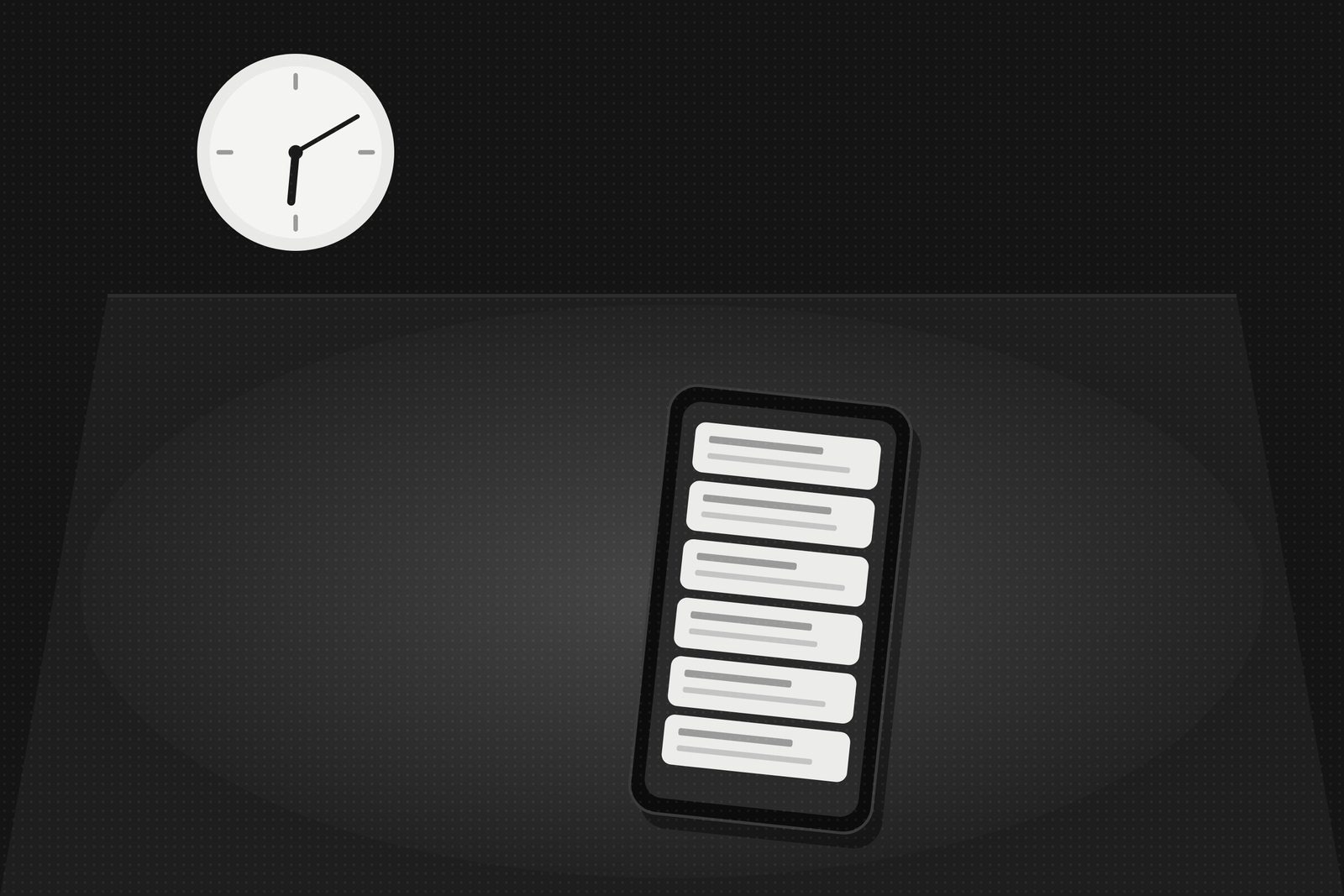
The first to read Loan’s message was Khoa. Ever since he had almost gone back to watching the support inbox, he had kept a small habit: every morning he opened the support inbox before office hours and read each message the way people read the morning paper. That morning, he didn’t mark the ticket done, and he didn’t pass it to an agent to handle. He called Thắng Tất, then Phong, then posted one line in capitals in the shared channel that the whole team would remember long afterwards: STOP ALL UPDATES. APPOINTMENTS ARE SWAPPING DAY AND MONTH.
The bug wasn’t hard to find. At midnight, a small update had gone out to make all the agents read dates the same way. That update read them the wrong way round, taking the day for the month and the month for the day. October 12 became December 10, April 3 became March 4. In six hours, one thousand two hundred and forty agents had sent nearly three thousand wrong reminders to the customers of hair salons, clinics, yoga classes and repair garages.
By eight, Phong had pulled the update. By ten, the agents had messaged every customer again, with an apology. By noon, there were no new complaints.
The person who had pushed the update at midnight was Lực Sỹ.
The whole team knew it before anyone said so. In more than six years at Hải Đăng, Lực Sỹ had never broken a single update. He was the most careful person in the company, the one who typed so slowly, as if afraid of hurting the system, the one the whole team still joked about whenever there was a change: wait till Sỹ has tested it. That morning, when the night shift ended, he didn’t go home. He stayed at his desk and said not a word until noon.
It’s Fine
Thắng Tất knew he had to talk to Lực Sỹ. He had been leading the team for two months. This was the biggest incident yet, and the person who had caused it was the one who had taught him to go looking for where it hurts.
He walked over to Lực Sỹ’s desk three times. The first two times, he turned back halfway. The third time, he pulled up a chair and sat down, and heard himself say something he hadn’t meant to say:
“It’s fine. It was a system error, that’s all. Anyone on the night shift could have…”
Lực Sỹ looked at him. The look wasn’t angry, nor was it grateful. It was only a little sad, like the look of someone who has just been handed a glass of water when what he needed was a ladder.
“Right,” Lực Sỹ said, and turned back to his screen.
Thắng Tất went back to his seat, feeling he had just done something very wrong without knowing where the wrong was.
That afternoon, Trung walked past Khoa’s desk. He stopped, rested a hand on the back of the chair, and spoke loudly enough for the whole row to hear:
“You read it at a quarter past six, and by seventeen past you’d called. You didn’t close the ticket, you didn’t wait for more complaints to be sure. Those two minutes saved about five hundred wrong reminders. Thank you.”
Then he walked on. Khoa sat very still, his ears turning red. Thắng Tất watched Trung go, and realized that in two months he had never praised anyone on the team like that: right away, specifically, with a number, in front of everyone. He had always meant to praise them, had always thought he would do it all at once at the end of the quarter, when everything was finished.
That evening, he opened the old book Trung had left on his desk. On one page with pencil marks there was a single line:
Praise a person the moment they do something good; do not wait until they are perfect.
On the facing page, in the same pencil, was another passage. The writer said people dislike being criticized because they are criticized too rarely. When criticism is rare, every instance of it feels heavy. If it is done often, treated as a way of giving each other feedback and learning together, criticism becomes much lighter.
Thắng Tất read the two passages side by side, then thought of the words “it’s fine”. He hadn’t praised anyone when they did well. And when someone got something wrong, he hadn’t dared to tell the truth either. Those two things, it turned out, were one and the same.
Writer’s corner – The “um” after the presentation
In 2017, Kim Scott, who had led many teams at Google and Apple, published Radical Candor. She places all feedback on two axes: do you genuinely care about the other person, and do you dare to say directly what they need to hear? Caring without daring is ruinous empathy. Daring without caring becomes aggression. Only with both do you get radical candor.
That harsh-sounding name is often read as a licence to be blunt. In fact, the very story Scott likes to tell shows that candor means caring patiently until the other person truly hears.
Soon after joining Google, Scott presented an update on the AdSense business to the founders and the CEO. Afterwards, her boss, Sheryl Sandberg, invited her for a walk, first praised what had gone well, and only then told her she said “um” rather a lot. Scott brushed it off. Sandberg offered to hire a speaking coach, and Scott brushed that off too. Only then did Sandberg say it plainly: when you say “um” every third word, it makes you sound stupid. Scott later called it the kindest thing Sandberg could have done.
Thắng Tất’s “It’s fine” fell squarely in the box of ruinous empathy. Trung’s two sentences, on the other hand, followed Sandberg’s road exactly: say clearly what happened, then say what you believe about the person in front of you.
Two Sentences
The next morning, Trung asked Lực Sỹ and Thắng Tất into the small meeting room at the end of the corridor, the windowless room with the yellowing whiteboard. The line from the ninety days was still faintly visible on the board.
Trung didn’t bring coffee. He sat across from Lực Sỹ and put both hands on the table.
“I’ll say just two sentences,” he said. “The first: on Tuesday night, you pushed the update without running the test against real data. It was the first time in more than six years you skipped that step. Because you skipped it, three thousand customers got wrong reminders, and fourteen people showed up on the wrong day.”
Lực Sỹ didn’t lower his head. He looked straight at Trung and gave a slight nod, the way people nod when they hear a figure read out correctly.
“The second: you are still the most careful person in this company. One skipped step doesn’t change that. But it shows that your carefulness rests on you more than on the process. And you do get tired sometimes.”
The room went quiet for a while.
“The update was so small,” Lực Sỹ said. His voice was hoarse. “Twelve lines. I thought twelve lines didn’t need testing.”
“At midnight, no change is small,” Trung said. “There are only changes whose consequences we don’t know yet.”
Thắng Tất sat beside them, and for the first time he understood why his “it’s fine” the day before had been wrong. Trung hadn’t said Lực Sỹ was careless. He hadn’t said it was a system error. He had said exactly what had happened, when, and what it had led to. Then he had said what he believed to be true about the person in front of him. Neither sentence was gentle. But when they were said, Lực Sỹ sat up straighter rather than sinking down.
“I want to rewrite the test step,” Lực Sỹ said. “So it doesn’t depend on me anymore.”
“Go ahead,” Trung said. “And there’s one more thing, a harder one.”
Writer’s corner – The bell curve
In 1996, Avraham Kluger and Angelo DeNisi gathered more than six hundred measured effects of the comments people receive about their work. On the whole, feedback helped people do better, but in more than a third of cases it made their performance worse. What decided it was where it pulled attention: toward the work, or toward the listener and the question “What kind of person am I?”
So the most dangerous feedback isn’t necessarily harsh criticism, but the kind that has hardened into a system, sticking a label on a person and letting the label speak in place of the work.
At Microsoft, team leaders once had to place their people on a predetermined curve, some “top”, some “average”, some “poor”, even when they felt the whole team had done equally well. In 2012, Vanity Fair named this ranking as one cause of the company’s “lost decade”. On November 12, 2013, head of human resources Lisa Brummel sent an email to the whole company doing away with the curve, and from then on reviews also looked at how each person worked with others.
“You skipped the test against real data” is a sentence about the work. Hearing it, Lực Sỹ sat up straighter, because it told him what he had to fix rather than sticking a label on him.
In Front of the Whole Company
The harder thing Trung had in mind was the all-company meeting on Friday afternoon.
Trung suggested that Lực Sỹ stand up himself and tell the story of the incident. Not to admit fault. To tell it: what had happened, why the most careful person in the company had skipped the test step, and how the test step would be rewritten from now on so that it no longer depended on one person.
Lực Sỹ didn’t answer right away. He was one of the quietest people at Hải Đăng. In all the time Thắng Tất had known him, he had never once stood in front of the whole company to tell a story about himself.
“Our people aren’t used to talking about each other’s mistakes in front of a crowd,” he said at last.
“Yes,” Trung replied. “The old book says the same. We Vietnamese have a culture of avoiding criticizing someone who has made a mistake in front of others. But right after that, the writer asks: if one person has already had to get it wrong, has had to pay a price to find a lesson, why not share that lesson with everyone, so the mistake isn’t repeated?” He looked at Lực Sỹ. “A failure is only a failure if it doesn’t become experience. You’ve already paid the price. Don’t let it go to waste.”
On Friday afternoon, all twelve people of Hải Đăng filled the large meeting room. Lực Sỹ stood up with no slides, holding only a sheet of paper printed with the twelve lines of that update. He spoke for eleven minutes. His voice was quiet, at times halting, at times stopping altogether while he searched for a word. But no one in the room took their eyes off him.
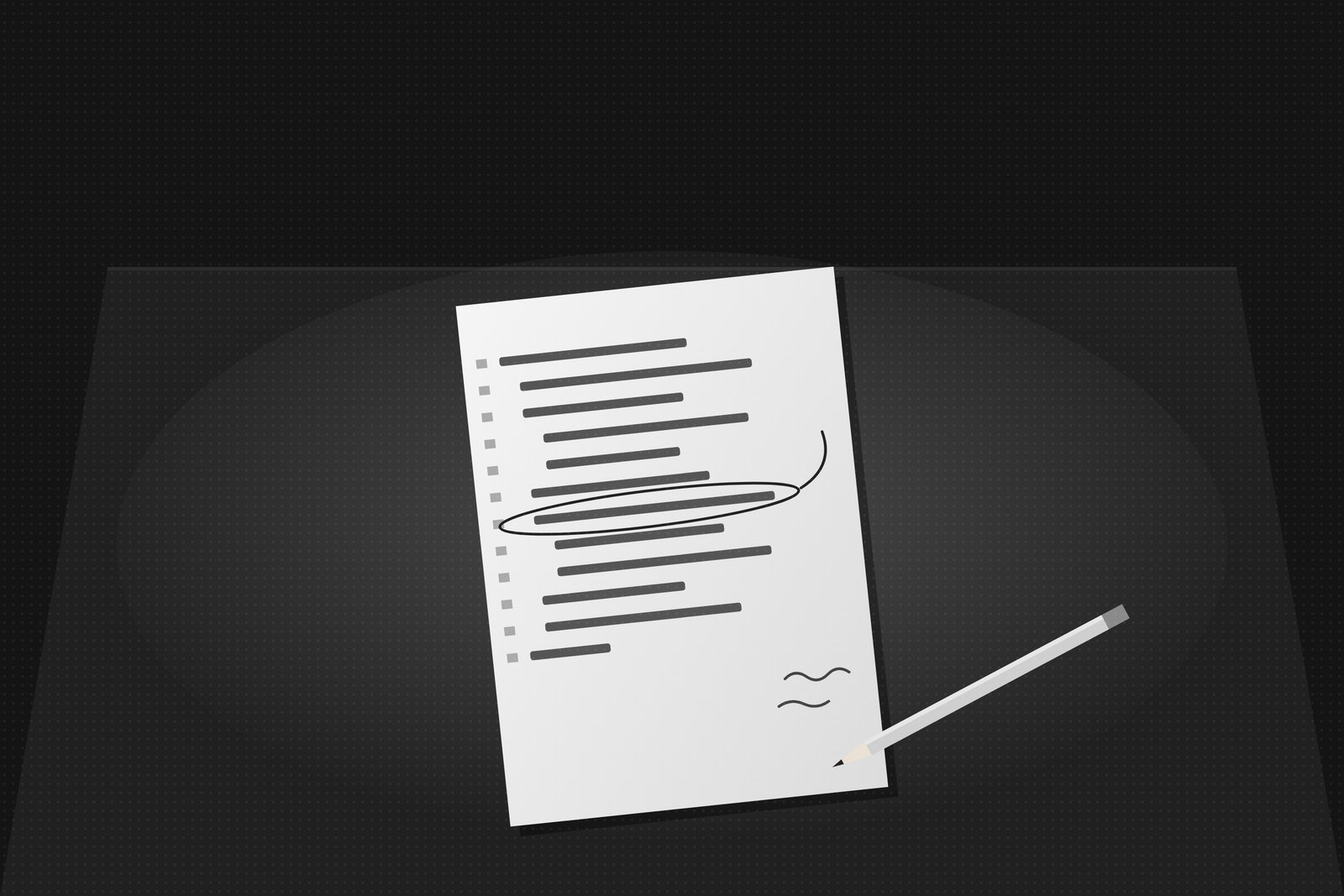
He talked about Tuesday night. About how, since taking over the night shift from Phong, he had spent three nights in a row on duty while sitting with Khoa, going back over Phong’s system. About how twelve lines had looked too small to need testing. About the fourteen customers who had come on the wrong day, among them a seventy-year-old woman who had taken a motorbike taxi to the clinic, and then a motorbike taxi home again.
At the end, he read the new test step aloud. It wasn’t long. Every update, even a single line, had to be run against the previous day’s real data, and a second person had to look at the results before it went out. No exceptions. Not even for him.
When he sat down, nobody clapped. Then the head of product, sitting in the front row, stood up and said he wanted to apply that test step to the whole company, starting Monday.
On Monday morning, the new policy was sent to the whole company, signed by the head of product. Thắng Tất skimmed it, then slowed down and read it again. It didn’t contain only Lực Sỹ’s test step. It had three more points: no updates pushed after eleven at night unless there was an incident; whoever was on the night shift must have a backup; and every incident must be told in person to the company by the people involved within one week. Those three points matched, word for word, what Trung had written on the whiteboard in the small meeting room on Thursday afternoon, after Lực Sỹ had gone home. Thắng Tất had managed to photograph the board before someone wiped it clean.
Thắng Tất took the document over to ask. Trung only said: “Yes, it doesn’t matter who signs it, as long as people read it.”
Perhaps Trung had passed the draft on to the head of product. Perhaps the two of them had known each other for a long time.
Writer’s corner – Asking why five times
In 2007, Sidney Dekker, a researcher in aviation and healthcare safety, published Just Culture. He asked how people can be made to feel safe telling about their mistakes while accountability stays fully intact. If all you do is look for someone to punish, mistakes get hidden; if no one is held accountable, apologies become cheap. The question to ask is: what made it seem reasonable at the very moment it happened?
Just culture is often boiled down to “don’t blame”, but that is only half right, because accountability doesn’t disappear. It changes direction, from who was wrong to who has to fix what.
On January 31, 2017, a GitLab engineer meant to delete data on a secondary server but deleted it on the primary instead. He stopped the command after a second or two, but some three hundred gigabytes were already gone, the site was down for about eighteen hours, and the backups turned out to have been quietly failing. GitLab livestreamed the data recovery, then published an analysis that asked “why” five times, tracing it all the way back to a spammer’s report. Among the things to fix was helping whoever types a command see clearly which server they are on.
Lực Sỹ stood in front of the whole company not to plead guilty. He was the witness who understood best why, that night, skipping the retest had seemed reasonable.
Lực Sỹ’s Praise
On Friday evening, when the office had emptied, Lực Sỹ walked past Thắng Tất’s desk. He stopped and tapped the tip of his pencil lightly on the edge of the desk, a habit Trung kept telling him to drop.
“On Wednesday, you told me it was fine,” he said.
Thắng Tất looked up. “I’m sorry. I…”
“Don’t say that next time.” Lực Sỹ’s voice held no reproach. It was as calm as the voice of someone teaching a configuration step. “At that moment I needed to know where I’d gone wrong. You lead the team. If you don’t tell me, who will?”
Thắng Tất nodded. He didn’t know what to say.
Lực Sỹ had gone a few steps when he turned back.
“One more thing. The ‘Why’ page you wrote back at the clinic, I still use it every time I take on a new customer. Nearly a year now.” He paused for a moment. “I should have told you that on the very first day.”
Then he went home. Thắng Tất sat on alone in the empty office. It was the first praise he had ever received from Lực Sỹ. It had come nearly a year late, and it still made him feel warm, as if someone had just put a coat around his shoulders.
He opened his notebook, and before writing anything about the incident, he wrote down five names, each with one specific good thing that person had done that week. Khoa, reading Loan’s message at a quarter past six. Phong, pulling the update within two hours. Quân, sitting and calling back the customers who had come on the wrong day. Thư, who had filled in the “what-if-it-fails” column for that very update beforehand, writing that the first to find out would be the customers, and nobody had read it. Ngọc Mai, rewriting three thousand apologies for the agents in a single morning, no two of them alike.
On Monday morning, he went to each person’s desk and told them exactly what they had done well, without waiting for the end of the quarter.
Ngọc Mai’s desk was the last. He told her exactly the sentence he had written in the notebook. When he finished, she looked at him a little longer than usual, then asked, “And you? Who praises you?” He was about to say Sỹ, then thought better of it and only smiled. He carried that question with him for the rest of the morning.
Before lunch, he called Loan to thank her for writing to Hải Đăng instead of quietly cancelling her package. She laughed down the phone. “I thought you had a hundred people watching for this kind of thing.” “We’re twelve people,” he said. “That morning, the best one watching was you.”
· · ·
There was one thing Thắng Tất did not write in his notebook. On the night Lực Sỹ broke the update, the number in the log went down for the first time, from 86.4% to 82.3%. Six hours of agents getting it wrong, six hours of people carrying every case by hand.
He watched the number fall and did not know whether to feel relieved or afraid.
Thắng Tất’s Notebook
He wrote this page after the meeting on Friday afternoon:
- Praise right away; don’t wait for perfect. Praise that comes nearly a year late is still warm, but praise that comes right away teaches a person what to do again. Praise must be specific: what was done, when, and what it led to.
- Honest criticism goes at the work, not the person. Say exactly what happened and what it led to. Then say what you believe to be true about that person. “It’s fine” isn’t kindness. It takes away the other person’s chance to learn the truth.
- A mistake is only a failure if it doesn’t become experience. The person who paid for the mistake has the right, and the responsibility, to tell everyone about it. Don’t let that price go to waste.
In the margin, he wrote small: Not praising people when they do well, and not daring to tell the truth when they get it wrong. It turns out to be the same illness.
Over to you
- When was the last time you praised someone right after they did something well, down to the specific thing they did?
- Have you ever said “it’s fine” to someone who needed to know where they had gone wrong? What kept you from telling the truth?
- When you give feedback, are you talking about what the person did, or about who they are?
- Did your team’s most recent mistake become shared experience, or was it just quietly let go?
Further reading: Kim Scott, Radical Candor, St. Martin’s Press (2017); Avraham N. Kluger & Angelo DeNisi, The Effects of Feedback Interventions on Performance: A Historical Review, a Meta-Analysis, and a Preliminary Feedback Intervention Theory, Psychological Bulletin (1996); Sidney Dekker, Just Culture: Balancing Safety and Accountability, Ashgate (2007). Hải Đăng and all characters are fictional.