Three Lines
On Monday morning, Trung told the team he would be away for two weeks.
He said it at the end of the start-of-week meeting, after Quân had read out the numbers and Thư had asked her question. No explanation came with it. Thắng Tất asked where he was going, and Trung only replied: “I have work somewhere else. There are people there who need to be heard, too.”
When Thắng Tất got back to his desk, there was a small card on his keyboard, the size of a palm, in that familiar slanting hand. Just three lines:
One. No customer should have to report something a third time.
Two. Before the end of the month, garment workshops and repair garages get an evening check-in of their own trade.
Three. Don’t call me, unless someone could be harmed.
Thắng Tất turned the card over. The back was blank. No plan, no to-do list, no word about where to begin. He read the three lines once more, and the palm-sized card suddenly felt much heavier.
At noon, he went looking for Trung to ask more. Trung’s desk was already empty. All that was left was the swivel chair, turned slightly to one side, and a faint ring on the wood where his coffee cup was set down every day.

Two Camps
The first line everyone understood. It had become the team’s catchphrase ever since the yarn lady. The third line nobody wanted to think about. Only the second line split the room in two.
Phong was the first to speak up, that very Monday afternoon. He already had a plan, as neat as everything he did. Since the ninety days, the Sound Sleep package had reached nearly two thousand garment workshops and repair garages, but the nine o’clock evening check-in still ran only for the two hundred-odd clinics. All they had to do was take that part, change the wording to suit the two new trades, then let the agents learn the rest from their first conversations. Four days and it would be done. That left more than two weeks for testing.
Thư heard him out, then asked: “Have you been to a garment workshop?”
Phong looked at her. “No. But I’ve read their data.”
“The Sound Sleep package works because it carries Dr. Diệp’s nine o’clock promise,” Lực Sỹ said slowly, tapping the tip of his pencil lightly on the edge of the desk. “What a garage owner worries about at nine at night, we don’t know yet. We have to go and see first. Two weeks.”
“Two weeks of going to see, and then what do we build with?” Phong shot back.
By Wednesday, the argument was no longer between three people. Ngọc Mai, the head of sales and one engineer leaned toward Phong. Khoa, Hằng and Quân leaned toward Thư and Lực Sỹ. In the shared channel, the messages grew longer, and then the private messages began. By the afternoon, both camps had come to Thắng Tất’s desk, one each, and both had said the same thing in different ways: you lead the team, you decide.
On Wednesday evening, Thắng Tất sat alone in the empty office. He opened his phone and typed a message to Trung. The team’s split into two camps, I don’t know whether to…
He stopped. He looked at the card propped against his keyboard. The third line.
Nobody was being harmed. It was only him who didn’t know what to do.
He deleted the message.
When he looked up, Ngọc Mai was standing in the doorway; she said she had come back for a charger she’d forgotten. She picked up the card from his keyboard, read it, then set it down. “Three lines, and you’ve been reading them since this afternoon?” She didn’t wait for an answer. She left a box of xôi, still warm, on his desk, told him to eat first and think after, and went home. Thắng Tất opened the box of xôi and ate. Halfway through, he found he was smiling.
Writer’s corner – The ones who hear the guns
In 2011, Stephen Bungay, a military historian who had worked as a strategy consultant, published The Art of Action, recounting how the Prussian army under General Helmuth von Moltke learned to fight amid chaos. The more detailed an order, the faster it went out of date once the shooting started, so commanders stated only their intent, what had to be achieved and why, and left the how to the people on the ground. There are always gaps between plans and results, and according to Bungay, filling them with more detail only makes them wider.
This style of command is often taken to mean handing down less. Yet its hardest part lies with the one giving the orders: to say little and say it clearly, you have to know exactly what you want.
On January 16, 2009, speaking to Huawei’s sales organization, its founder Ren Zhengfei said something that would be quoted for years: let those who can hear the gunfire call in the artillery. On the front line, the company teamed up the people responsible for the customer, for the solution and for delivery into an “iron triangle”, free to decide for themselves within the limits they had been given. The part few people mention is the rear: if it is not strong enough to support them, the more authority the front line is given, the further it drifts.
Trung’s three-line card stated the destination and exactly one case in which to call back. It took Thắng Tất two days to understand that it didn’t tell him what to do, but what must not be traded away.
Pushing Down, Holding On
That night Thắng Tất didn’t go home. He opened the old book Trung had left on his desk and turned slowly through the pages with pencil marks.
On a page near the end, he found a short line underlined twice:
When you assign work, assign the goal, the result to be achieved, rather than the way to do it.
That one he could have guessed. But on the facing page was another passage, which he had to read three times before he saw how it concerned him. The writer said that a good way to run things is to decentralize and centralize at once, like two sides of the same coin. Day-to-day decisions must be pushed down. But decisions about strategy, about how things are run, about the criteria for making decisions, must be held at the top.
Thắng Tất looked at Trung’s card. Then he understood: those three lines were three criteria, not three tasks. Trung had kept for himself exactly the part that had to be kept, what mattered and what could not be traded away, and pushed all the rest down.
And now both camps wanted him to do the opposite: to choose a method for them.
A few pages later, he found the third passage. The writer described two kinds of leaders to avoid. The first was the bureaucrat, who knew things only in general, handed out work and never checked it. The second did everything with his own hands, so that his people never got to grow.
Thắng Tất laughed out loud. For two days he had been so afraid of becoming the first kind that he had very nearly thrown himself headlong into the second.
At the bottom of that page, in the same faded pencil, was a line in capitals, so short it looked like a slogan pasted on a factory wall:
TEST FAST, SO THAT IF SOMETHING IS WRONG IT SHOWS EARLY, AND FIX IT FAST.
Try Both
On Thursday morning, Thắng Tất called the whole team into the large meeting room. He didn’t bring a decision. He brought Trung’s card, and laid it on the table.
“I’m not choosing a side,” he said. “Both ways make sense. So we’ll try both, this week.”
Phong would build a small automated version in two days, then test it with twenty repair garages from Saturday evening. Thư and Lực Sỹ would visit five garment workshops and five repair garages, and sit there from morning till night, the way Thắng Tất had once sat in Dr. Diệp’s clinic. For those two weeks, Khoa would cover the night shift for Lực Sỹ, with Phong as backup. On Wednesday of the following week, the two groups would meet and put the two results side by side.
“So who makes the final call?” Ngọc Mai asked.
“The first line does,” Thắng Tất said, pointing at the card. “Whichever way means nobody has to report something a third time, that’s the way we keep going. I only hold the criteria. The methods are yours.”
The room was silent for a moment. Then Phong stood up, picked up his laptop and walked out first. Thư watched him go, and for the first time Thắng Tất saw her smile at Phong, the smile of someone who has just been offered a fair challenge.
Writer’s corner – Two encyclopedias
In 2000, Edward Deci and Richard Ryan summed up several decades of research that laid the foundation for self-determination theory. In their view, people have three basic psychological needs: to be autonomous, to feel competent, and to be connected to others. When those three needs are met, motivation comes from within and lasts far longer; when people are tightly controlled, even with rewards, it tends to wear away. In 2009, Daniel Pink brought these ideas to a wide readership with his book Drive.
Autonomy is often mistaken for having no rules at all. In fact, people give their best when the rules of the game are clear and the way of playing is theirs.
In Drive, Pink retells the race between two encyclopedias. Encarta was born in 1993, backed by Microsoft, with well-paid managers overseeing a staff of professional writers and editors. Wikipedia went online in 2001, written by volunteers for the joy of it, not for money. On March 30, 2009, Microsoft announced it was shutting down Encarta, and at the end of October that year its sites went dark.
Phong and Thư argued for two days not because they liked arguing, but because both of them were really thinking. And the six days Thư spent sitting in repair garages and garment workshops weren’t in any job description of hers.
The Fifth Day
On Friday afternoon, the team’s largest customer sent a letter demanding to cancel its contract.
It was Khang, the owner of four small pharmacies, who ran all four counters on his own with the help of agents, and one of the team’s first big customers outside dentistry. The letter was short and cold: twice he had reported that the pharmacies’ ordering agent kept ordering a drug the supplier had stopped making. Twice the ticket had been closed with the words Resolved. And this week, the agent had ordered it again.
“I don’t intend to report it a third time,” Khang wrote on the last line.
The whole team read the letter in silence. Then Quân said what everyone was thinking: “Should we call Trung?”
Thắng Tất looked at the card. Then he turned to Thư. “Could anyone be harmed?”
Thư thought for a while, as seriously as when she read a claims file. “The agent orders a drug that’s been discontinued, and the order gets sent back. But if the pharmacy’s sales agent looks at that order and tells a customer it’ll be in stock soon…” She stopped. “Then someone will be waiting for a medicine that never comes.”
It took Phong twenty minutes to check. The sales agent hadn’t promised anyone. Not yet.
Thắng Tất didn’t call Trung. He posted in the team’s shared channel that the next morning he and Lực Sỹ would go to see Khang at seven, before the first pharmacy opened. Then he sat with Phong until eleven at night, working out why neither of the two earlier fixes had held.
It turned out that each time, whoever fixed it had deleted the drug from the order list. And each time, after three days, the agent had added it back on its own, because it learned from the pharmacies’ ten years of sales history, and in those ten years this drug had never once been out of stock. Nobody could fix an agent’s habit by deleting a line. It had to be taught that the world had changed.
At seven on Saturday morning, Khang met them at the first pharmacy, a narrow tube house on the corner of an intersection, its roller shutter only half raised. He listened to Thắng Tất’s explanation without interrupting. Then he said:
“Your chairman did call me last night.”
Thắng Tất faltered. He hadn’t expected Hải Đăng’s chairman to know Khang’s name.
“He asked me exactly one question: how many times I’d had to report it.” Khang poured three small cups of tea. “Then he said someone would come to see me, and that person understood this better than he did. I wasn’t going to see you. But hearing his voice, I thought I might as well wait and see.”
On the way back, Lực Sỹ was silent the whole time. Thắng Tất found it strange: since when had the chairman known about these four pharmacies? Then he guessed that Quân’s monitoring board must send automatic reports up the line, and stopped thinking about it.
Khang didn’t cancel the contract. The ordering agent for the four pharmacies was retrained in three days, this time with a new rule that Lực Sỹ typed into the system: When a supplier returns an error three times, don’t reorder. Ask a person.
The Second Week
On Wednesday of the second week, the two groups met in the large meeting room.
Phong’s automated version had been running with twenty repair garages since Saturday evening. By Sunday evening, three garage owners had complained. The agent, having learned from the clinics’ Sound Sleep package, had sent them a check-in message at nine in the evening: “Is it still very painful?” One owner replied with a smiley face. The other two weren’t smiling.
Phong was the one who told the story, without hiding a single word. The whole room burst out laughing, and this time he laughed with them.
“Wrong early, all right,” he said. “It showed after just one day. If we’d followed my original plan, it wouldn’t have shown until the end of the month, with two thousand garages.”
Then Thư stood up. After six days sitting in five repair garages and five garment workshops, she had found that the garage owners’ worry wasn’t at nine at night. It was at six in the morning, when customers who had left their bikes overnight called to ask whether they were ready, before the mechanics had even arrived. And at the garment workshops, the worry was at eleven at night before every delivery, when the owner sat counting the boxes one by one without knowing whether the receiving side had confirmed the arrival time.
“There’s no nine o’clock promise,” she said. “Every trade has an hour of its own.”
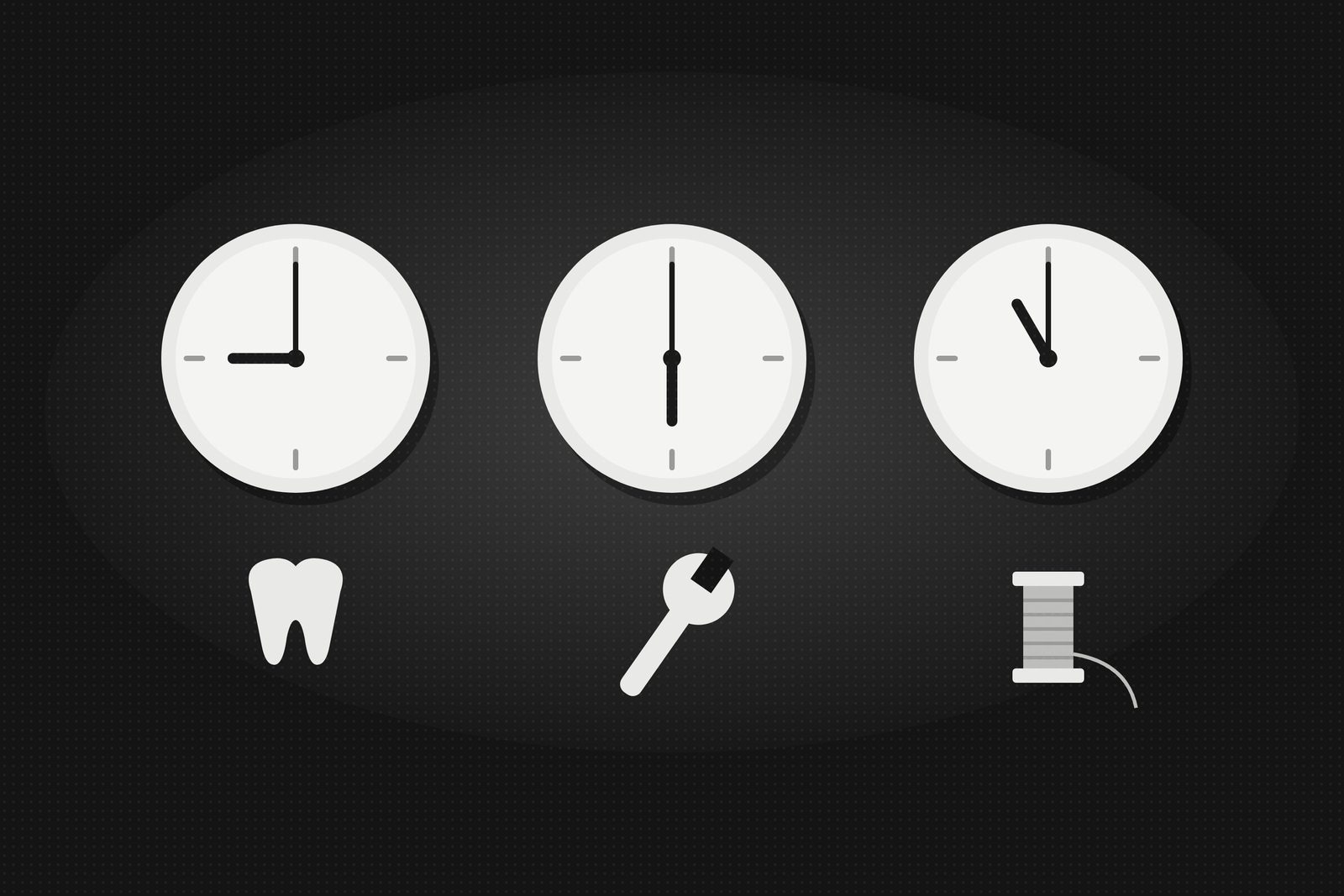
When she had finished, Phong opened his laptop. He sat there, right in the meeting room, and within an hour his automated framework had a new column: the worry hour for each trade, taken from what Thư and Lực Sỹ had written down. On Thursday morning, the repair trade’s own check-in went live for every garage. On Friday morning, it was the garment workshops’ turn.
Nobody had to report anything a third time. Nobody called Trung.
On Friday afternoon, Trung came back to the office. He didn’t ask about the numbers. He sat down in the swivel chair, still turned slightly to one side, stirred his coffee, then asked Thắng Tất exactly one question:
“Was there a moment when you nearly called me?”
“Three times.”
Trung nodded, as if that was exactly the number he had guessed. “I didn’t leave three lines so you’d do my job,” he said, “but so you wouldn’t need me anymore.”
That evening, Thắng Tất took a blank card, wrote it over four times, crossing out every last unnecessary word, then placed it on the keyboard of Quân, who would lead the search for the bakeries’ “hour of worry” the following month.
The seat-change custom had just been brought back, and Quân was the first to change seats: the young man who had once not dared to open his mouth at the all-company meeting was moving up a step to lead a piece of work of his own. And Thắng Tất, for the first time, was the one writing the three lines, not the one reading them.
· · ·
Before going home, Thắng Tất turned over Trung’s three-line card, its back still blank, and wrote a very small number in pencil: 87.6%.
Less than two and a half points short of the mark in the recalled email. He had not told anyone yet.
Thắng Tất’s Notebook
He wrote this page on the Wednesday night, then revised it on Friday night the following week:
- Give goals, not methods. A person who is given the method as well has only one thing left to do: follow. A person who is given only the goal has a reason to think.
- Push day-to-day decisions down; keep the criteria up. A team leader doesn’t choose a method on others’ behalf. A team leader keeps clear what matters, what can’t be traded away, and when to call upward.
- Test fast, so mistakes show early. When both ways make sense, stop arguing. Try both, small and fast, then put the two results side by side.
In the margin, he wrote small: Writing three lines is harder than writing three pages. Every unnecessary word is a decision taken away from someone else.
Over to you
- The last time you assigned work, did you give a goal or a method? How much room did the person have left to think for themselves?
- If you were away for two weeks, which three lines would you leave your team?
- On your team, which decisions should be pushed down, and which criteria must you hold on to?
- Is there an argument on your team that keeps dragging on, which could have been settled by one small test in a week?
Further reading: Stephen Bungay, The Art of Action: How Leaders Close the Gaps between Plans, Actions and Results, Nicholas Brealey (2011); Edward L. Deci & Richard M. Ryan, Self-Determination Theory and the Facilitation of Intrinsic Motivation, Social Development, and Well-Being, American Psychologist (2000); Daniel H. Pink, Drive, Riverhead Books (2009). Hải Đăng and all characters are fictional.