The Third Report
At Hải Đăng, agents did ninety percent of the work. Thắng Tất handled the last ten.
Hải Đăng, Vietnamese for “lighthouse”, rented out AI agents. Its customers were a new kind of business that had sprung up over the past few years: the one-person company. A single CEO, backed by a team of agents rented by the month. An accounting agent, a sales agent, a customer care agent, a purchasing agent. More than ten thousand companies like that ran on Hải Đăng’s platform. Behind the platform, the actual humans barely filled two rows of desks.
Trần Thắng Tất sat in the second row, on the customer operations team. His job was to handle the cases agents couldn’t resolve on their own, or the ones where a CEO didn’t like how an agent had resolved them. Each case arrived on his screen with a short chime. Two years, about a hundred chimes a day. So many that some nights, lying in bed, he could still hear them.
Thắng Tất was fast. He could read a conversation between a CEO and an agent in seconds, spot exactly where the agent had misunderstood, fix the configuration and close the ticket. Last week’s leaderboard ranked him fourth for handling time. He wasn’t the best, but nobody ever complained about him either.
And that was the problem. Everything was fine.
On his first day, Thắng Tất had been so nervous he read every line of an agent’s reasoning like a detective novel. He filled three pages of a notebook with the kinds of mistakes agents tended to make, and kept asking the trainer why the sales agent greeted customers so stiffly. Now the notebook sat in a drawer, its cover gathering dust. He didn’t need it anymore.
The 10:40 case came from a company that sold handmade woollen goods. Its CEO, and only employee, was a woman from Hanoi in her forties. Instead of messaging her agent as usual, she pressed the button to call a human.
“Last week I negotiated a new price for yarn with my supplier, and I told the purchasing agent. On Monday I reported that the accounting agent was still using the old price. It apologized and said it had fixed it. Yesterday I reported it again, someone on your team checked, and they said it was done. But this morning I opened my profit and loss report, and it’s still using the old price.”
Thắng Tất opened the history. Just as she said: two tickets, both closed as “Resolved”. He followed procedure. He checked the accounting agent’s memory and found the new price had been saved, but only as a “conversation note”, not written over the master price list. He updated it by hand and had the agent rerun the report. Four minutes, ten seconds. Right on target.
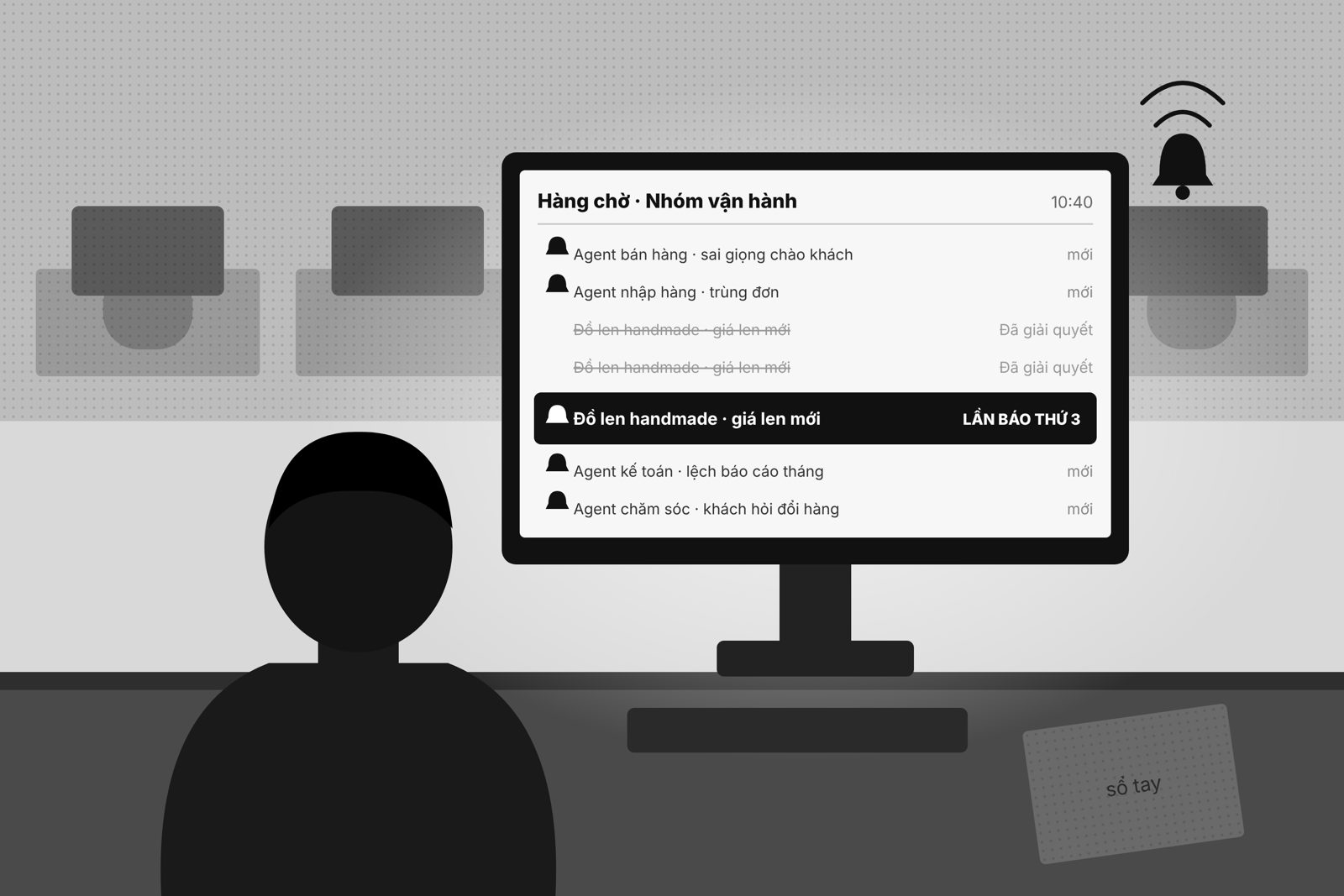
“It’s all fixed now. I’m sorry for the inconvenience.”
The line went quiet for a moment. Then she spoke, not angry, just stating a fact:
“Your agents apologize very politely. So do your people. I just hope I won’t have to report it a fourth time. It’s only me here, you know.”
The call ended. The chime sounded again. Thắng Tất took the next case, and the one after that. By lunch he had forgotten her voice.
But Lực Sỹ hadn’t.
Nguyễn Lực Sỹ sat at the next desk. He was five years older than Thắng Tất and one of Hải Đăng’s first hires, from back when the platform had only a few hundred customers. He didn’t talk much, and when he was thinking he tapped a pencil against the edge of his desk. That afternoon, when the queue finally thinned, Lực Sỹ swivelled his chair around.
“The yarn lady this morning. Third time, right?”
“Yes. I fixed it.”
“You fixed the ticket,” Lực Sỹ said. “But nobody has fixed why her agent needed fixing three times. Not even the agent.”
Thắng Tất looked at him, not quite following. Lực Sỹ didn’t explain. He only said that Trung was taking the team down to the river after work, and Thắng Tất should come if he was free.
When It Stops Hurting
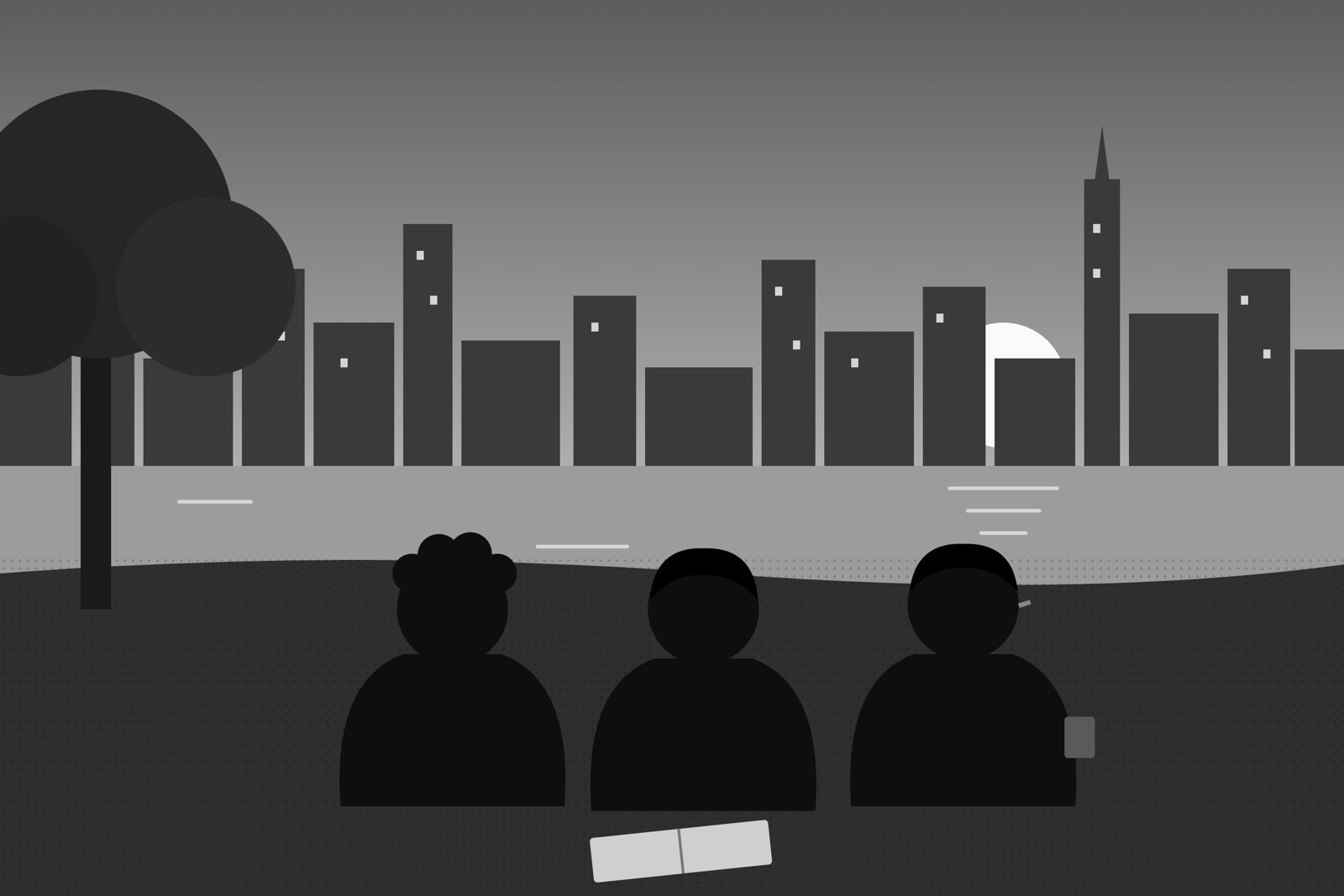
At five in the afternoon the riverbank turned a pale orange. On the far side, the tower blocks were starting to light up. Trung sat cross-legged on the grass, glasses low on his nose, a glass of iced tea in his hand. He led the operations team and had been working for almost twenty years, from the days when call centres were staffed entirely by people to now, when agents did nearly everything. He had watched plenty of companies grow and then collapse, and he rarely called anyone into his office. He preferred to talk in places with no meeting tables and no screens.
Thắng Tất sat down, opened his notebook out of habit, then closed it again. He couldn’t think of anything worth writing.
“Two years, and every day’s the same,” he said, half joking. “The agents do almost everything, and every update makes them a bit better. What’s left for me to learn? A few more years and I’ll probably be replaced by an agent myself.”
Lực Sỹ laughed. “I thought exactly the same thing. In my third year I was ready to quit. Then one day I sat down and counted, and found a CEO who’d had to report the same thing three times before it was fixed. The first time the agent fixed it itself, the second time a colleague fixed it, the third time another colleague. Everyone followed procedure. And it was still wrong.”
“Like my yarn lady this morning,” Thắng Tất said slowly.
Trung put his glass down. “Did it bother you, when she said it was only her?”
Thắng Tất thought for a moment. “A little. But I did everything I was supposed to.”
“That ‘little’ is precious,” Trung said. “I call it feeling the pain of your work. As long as something still hurts, you can still see what needs to get better. Agents don’t feel pain. They can apologize, they can fix things, they can close tickets. But it doesn’t bother them when someone has to report a problem for the third time. If we stop feeling it too, nobody in this company will see anything left to fix.”
He pulled a thin book from his backpack, its corners worn soft, and turned to the first underlined page.
“This was written long before anyone imagined agents. The author warns that if we aren’t moved by our everyday work, if it doesn’t hurt, if we don’t lose sleep over how to do it better, then the name we’ve built won’t survive in a market that never stops changing. I think it’s even truer now. Our market changes with every model update.”
“That sounds heavy,” Thắng Tất said.
“It is. But it’s not just us.” Trung smiled. “You know Toyota? When they were building their famous production system, an engineer named Taiichi Ohno used to tell his people something like this: having no problems is the biggest problem of all. If someone reported that everything was fine, he’d ask: so you’ve stopped looking? Toyota’s lines were full of machines, but the one who spotted what was broken still had to be a person.”
Lực Sỹ jumped in. “My old team had a ritual. Every Monday morning, everyone had to bring one ‘sore spot’ from the week before, something an agent did by the book that still went wrong. No solution needed, just name it. The first week, everyone was embarrassed. By the third week, the list filled a page.”
“Did you fix them all?”
“No,” Lực Sỹ admitted. “But we fixed one or two a week. A year later, looking back, the platform was a different place.”
Thắng Tất looked out at the river. A barge loaded with sand drifted slowly past, riding so low the water nearly touched its deck.
“Then tomorrow I’ll go looking for something that hurts,” he said.
Theory corner – Kaizen: improvement starts with seeing the problem
Kaizen is Japanese for “change for the better”. Masaaki Imai brought the idea to a global audience with Kaizen: The Key to Japan’s Competitive Success (1986). The core idea is small, continuous improvement carried out by the people who actually do the work, rather than waiting for big top-down overhauls. Kaizen does not start with a solution. It starts with the ability to see the problem. An organization where nobody reports problems is not a perfect organization. It is one that has stopped looking.
In a company where agents do most of the work, this matters even more. Agents can be designed to correct their own errors. But the “pain” Trung’s book talks about, caring enough to be bothered when something isn’t right, is still a human job.
The Night Before the Deadline
Thắng Tất’s first sore spot wasn’t hard to find. He went back through three months of “resolved” tickets, looking for CEOs who had reported the same issue again within a week. It took two lunch breaks. The result startled him: nearly one in five cases shared the same flaw. A CEO told one agent about a change, that agent remembered it, but the other agents in the same company never found out. The purchasing agent knew the new yarn price. The accounting agent didn’t. The system raised no error. It just quietly let it slide.
He sent the summary to Trung on Thursday afternoon. By Friday morning, things had become far more serious.
On Thursday night the platform had upgraded to a new model version. The new version was smarter and faster, but it gave the master price list priority over conversation notes. The small flaw Thắng Tất had just found suddenly spread. Several thousand one-CEO companies now had accounting agents drafting invoices and payment orders at old prices. The operations queue turned red. The platform team promised a fix, but Tuesday at the earliest. Meanwhile, midnight on Sunday was month-end. At that moment, thousands of agents would automatically send invoices to customers and pay suppliers, as they did every month. Nobody at those companies would double-check, because each company had only one person, and that person trusted their agents.
Trung’s team had five people, no authority to roll back the model, no budget, and two days.
On Friday evening the team gathered in a small meeting room. Thắng Tất spoke first, a little too fast.
“All I can see is the pressure. I can’t see any way out. We’re not allowed to touch the model.”
“Then we don’t touch the model,” Lực Sỹ said. “Last year my team was backed into a corner with nowhere to go. That’s exactly when we came up with a new way of working. When the usual path is blocked, you’re forced to look at things you always ignored.”
Trung tapped a finger on the table. “There’s a line in that book I keep reading: ‘Put them in a place of death, and they will live.’ The book credits Lao Tzu, but when I looked it up later I found the idea is from Sun Tzu’s The Art of War, in the chapter on the nine kinds of ground: throw your troops into deadly ground and they will fight their way out. The author used it to say that their organization came out of hardship, grew up through hardship, and owed its creativity to hardship.”
“But tonight it’s just the hardship,” Thắng Tất said, and the whole room laughed.
Then they started listing what they had, instead of what they lacked. They had Thắng Tất’s summary, which showed exactly which companies were affected. They had permission to message CEOs directly. And they had a button few people ever noticed: the “brake”, which paused all of an agent’s scheduled actions and switched them to wait for the CEO’s approval. Until then it had only ever been used one company at a time, when a CEO went away for a long trip.
“What if we pull the brake in bulk?” Thắng Tất asked. “We don’t fix the model. We just hold the invoices and payment orders before midnight. Then the agents redraft them at the right prices, so each CEO only has to tap approve once.”
No one on the team had ever done that, because no one had ever needed to. Trung called the head of the platform team at nine that night to get sign-off. By Sunday afternoon, five people had worked through more than three thousand companies and sent each CEO an apology with corrected invoices waiting for approval. The following week, invoice complaints were lower than in the week before the incident.
On Sunday night, Thắng Tất sat alone in the empty office. On his screen, thousands of agents were still quietly working for thousands of sleeping CEOs. He took out the old notebook, brushed the dust off its cover, and wrote his first line in two years: This incident is my first real problem.
Theory corner – Creativity under constraints
Researchers have looked closely at whether hardship makes us more creative. A review by Oguz Acar, Murat Tarakci and Daan van Knippenberg (Journal of Management, 2019) found the relationship is shaped like an inverted U. With no constraints at all, people tend to follow familiar paths. Moderate constraints on time, resources or rules push them toward new directions. But constraints that are too heavy smother creativity.
That is why the story above needed two conditions: the team already had data (Thắng Tất’s summary), and a leader willing to make a phone call at nine at night. Hardship only produces creativity when people still have enough authority and enough room to try.
Half an Hour a Day
A week after the incident, the leadership team sent Trung’s group a note of thanks. One phrase in it made Thắng Tất read it twice: “the bulk-brake initiative”.
“I don’t think that counts as an initiative,” he told Lực Sỹ over lunch. “I always thought an initiative here meant a new kind of agent, some feature the whole market would talk about. All we did was use an existing button in a different way.”
Lực Sỹ didn’t answer right away. He opened his laptop and turned the screen toward Thắng Tất. On it was the team’s queue, but far tidier than the one everyone else used.
“Last week I borrowed this template from the sales team. They use it to track CEOs on free trials. I dropped three columns, added one called ‘report number’, and set it to highlight any CEO reporting the same issue for the second time or more. It saves me half an hour of manual cross-checking at the end of every shift.”
“Half an hour is…” Thắng Tất hesitated.
“Half an hour a day, per person. Five of us, twenty-two working days a month.” Lực Sỹ shrugged. “Do the maths. But the column matters more. If we’d had it three months ago, you wouldn’t have spent two lunch breaks digging through tickets, and we might have caught that flaw before the model upgrade.”
Thắng Tất worked it out in his head: five people times twenty-two days times half an hour came to fifty-five hours a month. Almost a week and a half of one person’s work. In a company whose entire operations team was five people, that was not a small number.
That afternoon Trung walked past and caught the second half of the conversation.
“That is an initiative,” he said. “My book defines it very broadly. It can be a big business idea, but it can also be a newer, better way of doing everyday work. Even something done somewhere else or in the past counts, as long as it’s been ‘tailored’ to fit your own situation.”
“Tailored,” Thắng Tất repeated. He liked the word. It didn’t require you to invent the cloth. It only required the tailor to know the shape of the person wearing it.
“So anyone, in any role, can come up with an initiative.”
“In your role it’s even easier,” Trung said. “The agents do ninety percent of the work, but the other ten percent all passes through your hands. Every day you read a hundred cases the agents couldn’t solve. Nobody in this company, not even the agents, sees more of what hurts than you do.”
Theory corner – Small wins and the progress principle
In 1984, organizational psychologist Karl Weick published “Small Wins” in American Psychologist. He argued that when a problem is framed too large, people freeze because they feel powerless. Breaking it into “small wins”, concrete and achievable right away, lowers the pressure, builds a sense of control and draws others in.
Nearly three decades later, Teresa Amabile and Steven Kramer (The Progress Principle, 2011) analysed some 12,000 diary entries from 238 people at work. Of everything that makes for a good workday, the most powerful factor was making progress in meaningful work, even very small steps.
Trung’s book says the same thing in a practitioner’s words: an initiative is measured not by the size of the idea but by whether the work is better than it was yesterday. When agents handle most of the repetitive work, people’s small wins move somewhere else: into redesigning the processes the agents run on.
Thắng Tất’s Notebook
The notebook no longer lived in the drawer. At the end of the month, Thắng Tất flipped back through what he had written and copied three things he wanted to remember onto a fresh page:
- If it still hurts, you can still see the way. Agents can fix errors, but they aren’t bothered when someone has to report a problem for the third time. That feeling is the part of the job no one can replace. On days when everything is “fine”, ask yourself whether you’ve stopped looking.
- Hardship sets the problem. It doesn’t solve it. When the usual path is blocked, list what you have before complaining about what you lack. Sometimes the answer is an existing button, used in a way nobody has thought of.
- An initiative is tailoring, not invention. Borrow a good practice from somewhere else, adjust it to fit, and measure it in time and effort saved.
Underneath, in smaller handwriting, he added: The yarn lady never had to report it a fourth time. She works alone, but there is more than agents behind her.
Over to you
- Where is the “third report” in your work: something handled by the book, by a person or a machine, that still keeps coming back?
- If an agent took over ninety percent of your current job tomorrow, what would the remaining ten percent be? Is that where you’re investing most of your time?
- Find a good practice in another team or company. If you “tailored” it for yourself, what would you cut, and what would you add?
- Try Lực Sỹ’s ritual for four weeks: every Monday morning, everyone brings one thing that hurts. No solutions yet.
Further reading: Masaaki Imai, Kaizen (1986); Taiichi Ohno, the Toyota Production System; Sun Tzu, The Art of War, “The Nine Situations”; Acar, Tarakci & van Knippenberg, Journal of Management (2019); Karl Weick, “Small Wins”, American Psychologist (1984); Amabile & Kramer, The Progress Principle (2011). Hải Đăng and all characters are fictional.